Contents:
What is byzhy?
Byzhy is a stuffed sheep intestine that is gently simmered, rested and sliced crosswise. A cut piece reveals lamb and offal, white grains of rice, fat and seasoning. Its texture changes with the amount of grain and liquid: one batch can be loose and pebbled, while another sets into a close, almost even filling.
The dish belongs to the home butchering of a sheep. Heart, liver, fat, intestines and blood could be used while fresh instead of setting aside the most perishable parts of the carcass. Byzhy is therefore tied more closely to family events and slaughter days than to the production of an everyday sausage.
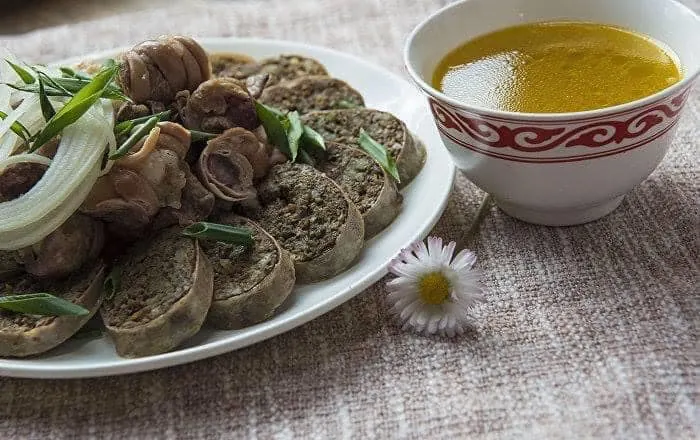 1/3. Byzhy with onion and broth Photo: Barometr.kg, Reuse with author credit and a direct link; edited for this site.
 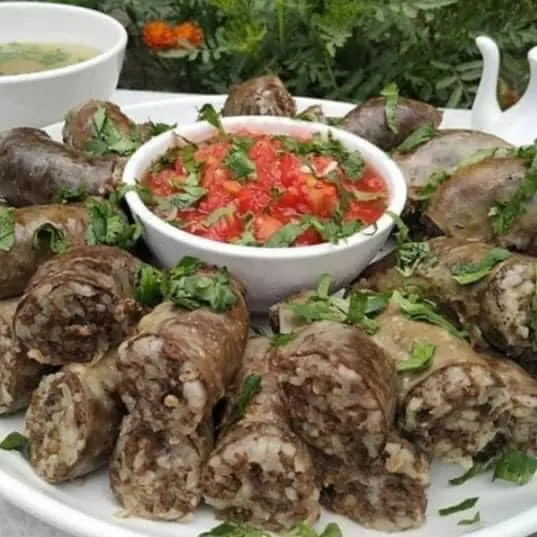 2/3. A festive platter of byzhy and tomato salad Photo: Barometr.kg, Reuse with author credit and a direct link; edited for this site.
 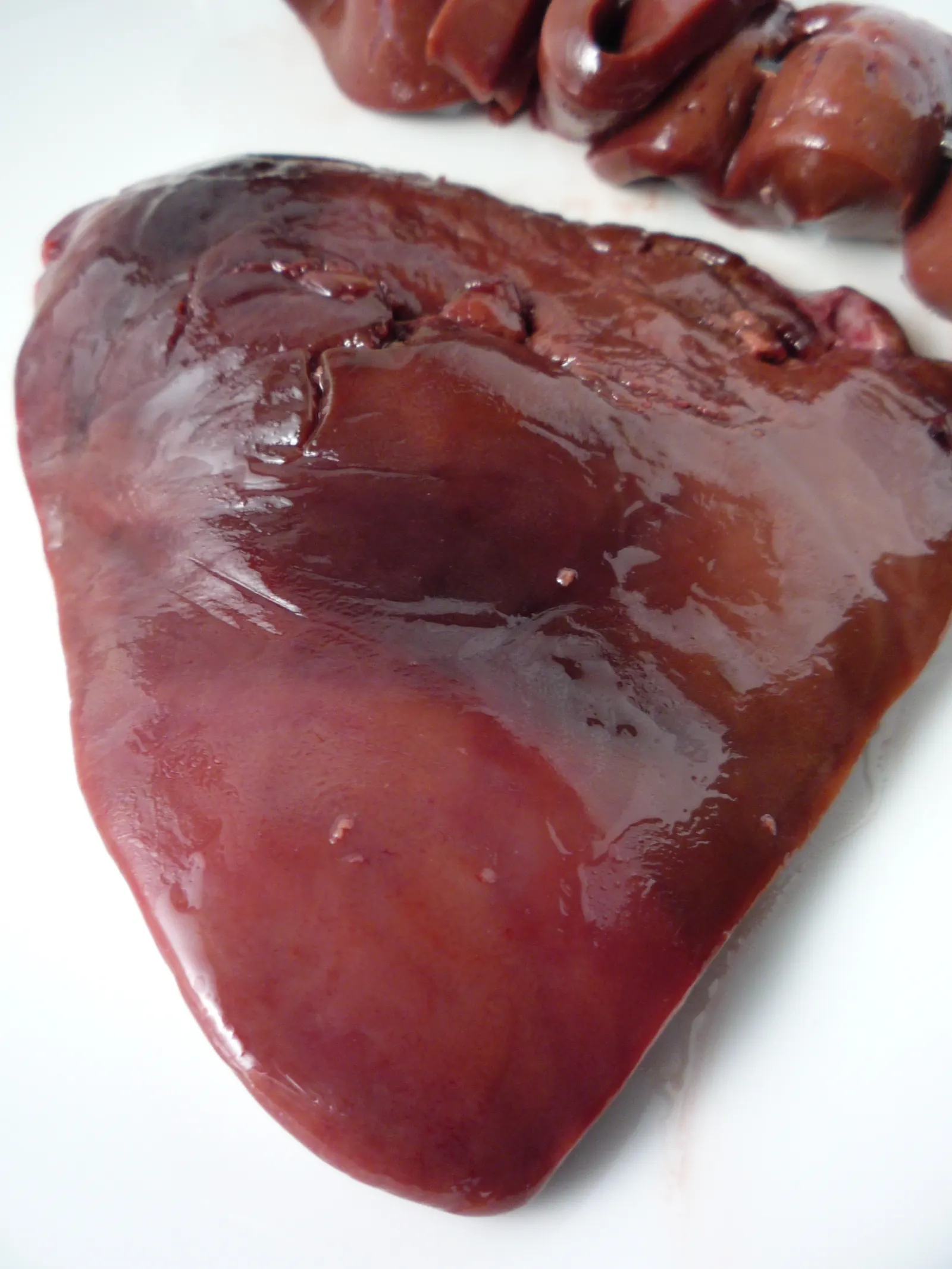 3/3. Lamb liver, one of the main offal ingredients in byzhy Photo: Beck, Wikimedia Commons, CC BY 2.0; edited for this site.
 Knowledge of making byzhy is registered for Kyrgyzstan as part of a wider tradition of meat processing that also covers chuchuk, zhorgom, olobo and tash-kordo. The international heritage database records a living practice in the country; it should not be confused with a separate UNESCO listing for the dish.
What goes into byzhy?
The core ingredients are generally ovine: a natural casing, lamb or offal and fat. Heart contributes firm pieces, liver softens and deepens the filling, and tail fat or internal fat keeps it moist. Onion, garlic, black pepper, cumin and paprika shape the aroma.
Rice absorbs the meat juices and binds the filling. It may go in raw, par-cooked or half-cooked, so the amount of water and spare room inside the casing must change with the method. Talkan, flour, mung beans, raisins, dried melon and nuts also appear in published variants. These are not random extras: a household adjusts the filling to its pantry and preferred texture.
One filling can be divided between lengths of intestine, or a family may prepare several kinds in the same session. Older descriptions also mention stuffing selected sections of the stomach. A visitor does not need to learn the anatomy. The useful questions are which offal, grain and blood went into the portion in front of you.
Blood and bloodless versions
Blood byzhy has a dark colour, a mineral note and a filling that sets more firmly. Fresh food-grade blood is combined with meat, mashed liver, fat, onion and rice. The amount varies widely: one formula adds a glass, while another uses blood as the main liquid in the mixture.
Bloodless byzhy keeps the same idea of a stuffed casing but builds its flavour from meat, heart, liver and fat. The Chuy recipe below follows that approach. It is also more realistic for a home kitchen, where fresh blood with a documented origin and an unbroken cold chain may be impossible to obtain.
Colour is not a reliable ingredient list. Liver and long-cooked offal also darken the cut surface. If blood matters for religious, medical or personal reasons, ask explicitly.
How do byzhy, chuchuk and zhorgom differ?
Chuchuk is horse meat and fat in a horse casing. The meat is often kept in long strips, creating large separate layers in each slice. Byzhy is generally based on lamb, and its chopped meat and offal are mixed with grain.
Zhorgom looks like a dense rope of cleaned intestine. Its structure comes from twisted or braided lengths of casing rather than a minced filling inside one wide tube. Both can be sliced into rounds on a meat platter, so the outside alone may be misleading.
Kuurdak may also include liver, heart and other offal, but those pieces are fried and served hot. Byzhy is assembled in a casing and simmered. The same ingredients produce a completely different texture.
How is byzhy served, and where can you try it?
Cooked byzhy is rested briefly and cut into thick rounds. It can be warm or cold, accompanied by onion, herbs, a vegetable salad and flatbread. A small bowl of meat broth may sit beside it. There is no compulsory garnish, and at home it often joins a larger platter of boiled meat and offal.
In Bishkek and Osh, look for it at restaurants specialising in Kyrgyz food, ethnographic festivals and prepared-meat counters. Supply varies because a fresh household batch is tied to sheep butchering. Calling on the day is more reliable than travelling to an address from an old list.
One slice is enough for a first taste. Liver, blood and tail fat make it rich, and a serving becomes heavy quickly. Ask whether the filling contains blood, which organs were used and whether it is served warm. You can then compare it with beshbarmak or shorpo, where the meat remains in larger pieces.
Choosing ingredients and cooking safely
For home cooking, buy chilled offal from a traceable source and a natural casing that has already been cleaned for food use. Heart and liver should remain cold, with no sour smell, sticky film or dried edges. Use raw blood only from a controlled food source; if that is unavailable, choose a bloodless formula.
Keep raw and cooked food apart. A separate board, knife, bowl and pair of tongs reduce cross-contamination. Do not rinse meat under a forceful tap, which can splash raw juices around the kitchen. Prepare the casing according to the supplier’s instructions and keep the filling chilled until it goes into the pot.
USDA guidance sets 71°C as the minimum internal temperature for ground lamb, heart and liver. The cooking time below is an estimate; a clean food thermometer checks the actual result. Move the cooked byzhy with clean tongs, cool leftovers promptly and refrigerate them.
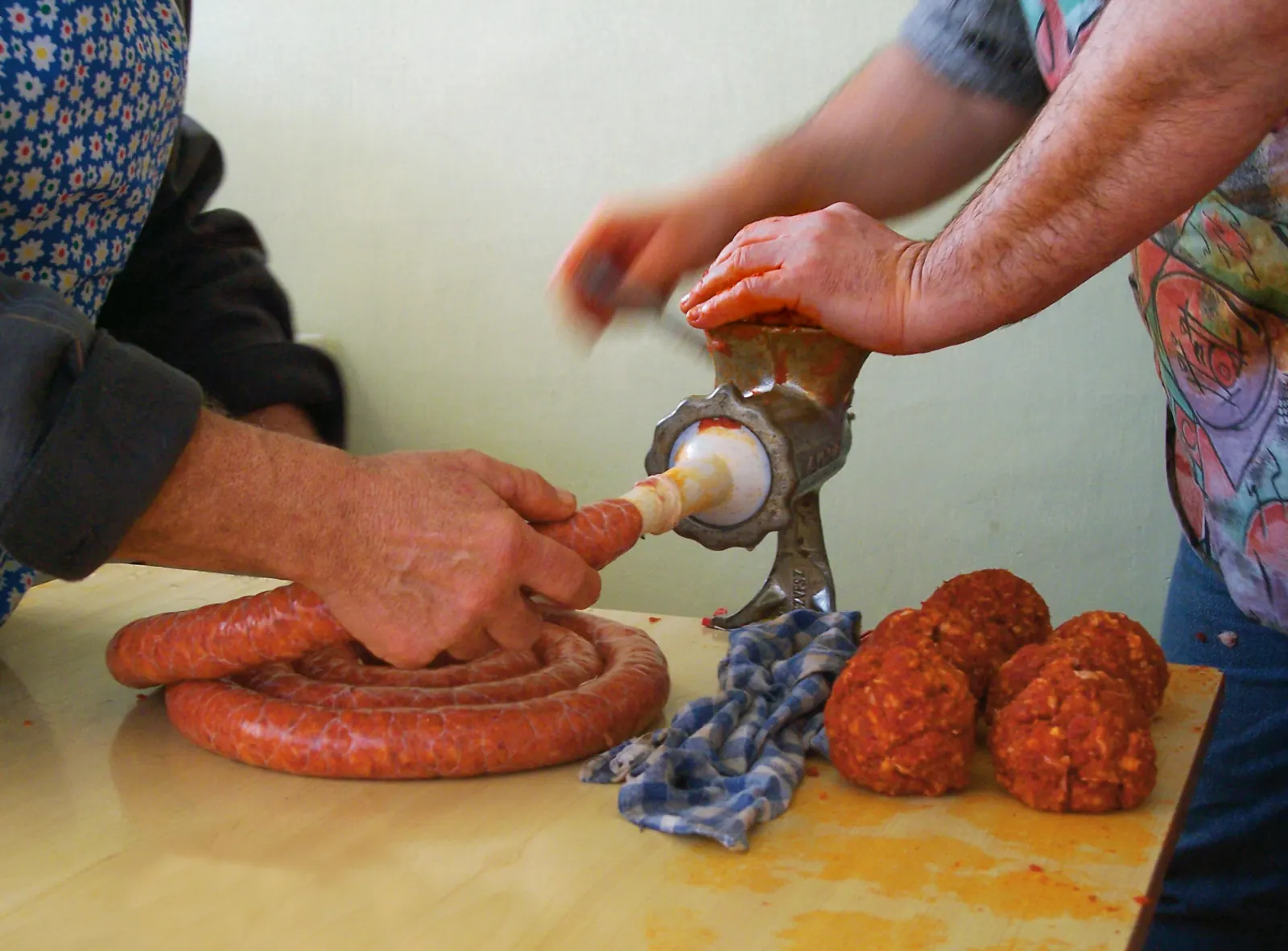 1/2. An example of filling a natural casing by hand, Hungary Photo: László Szalai (Beyond silence), Wikimedia Commons, Public domain; edited for this site.
 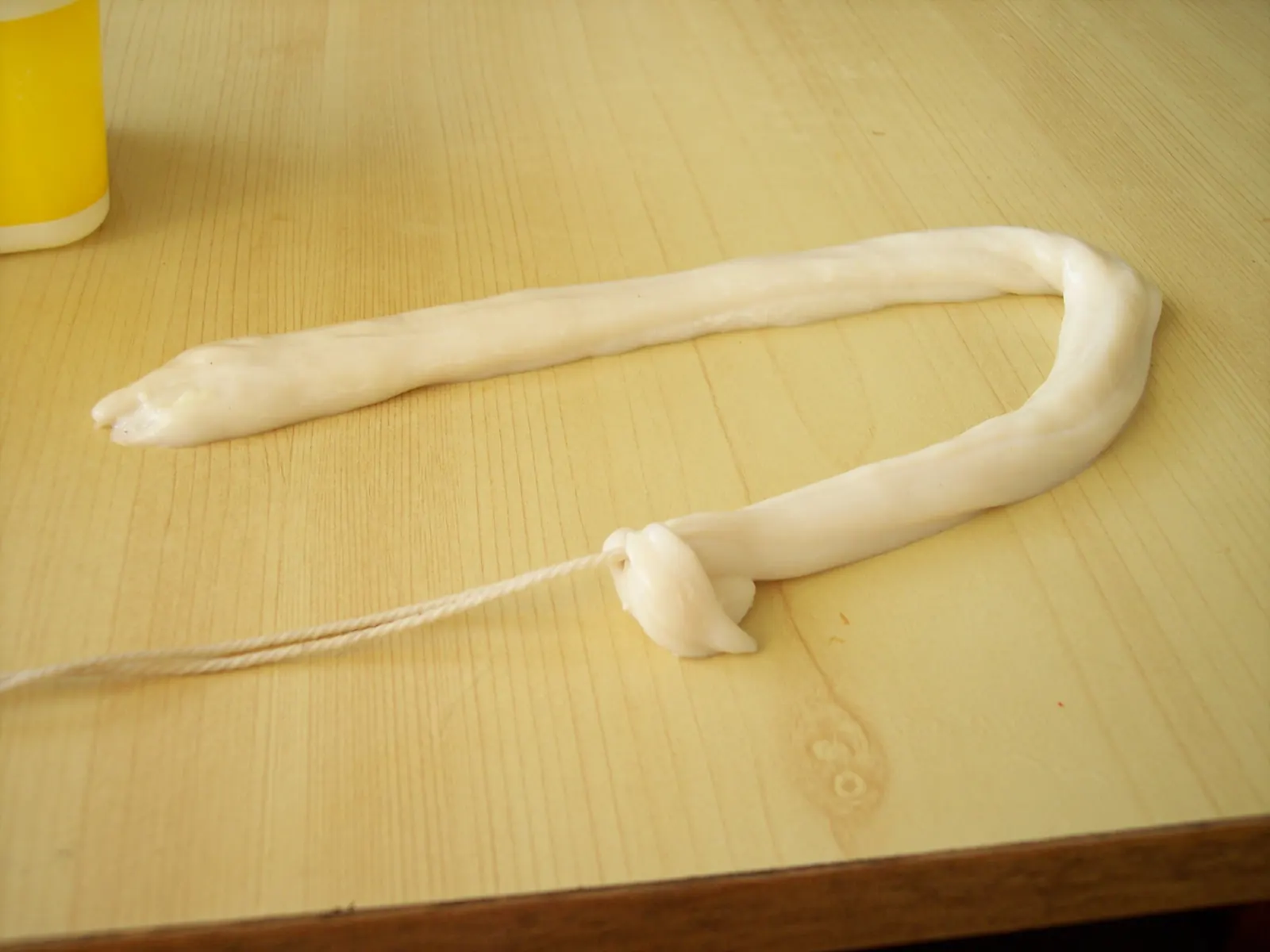 2/2. A prepared natural casing, Hungary Photo: László Szalai (Beyond silence), Wikimedia Commons, Public domain; edited for this site.
 The recipe below is based on a published Chuy version of byzhy. We fixed the salt quantity, divided the listed water between rice and filling, and added a temperature check. Nutrition is omitted because neither the cooked yield nor the actual proportion of fat has been established by a controlled test.
Bloodless Chuy-style byzhy
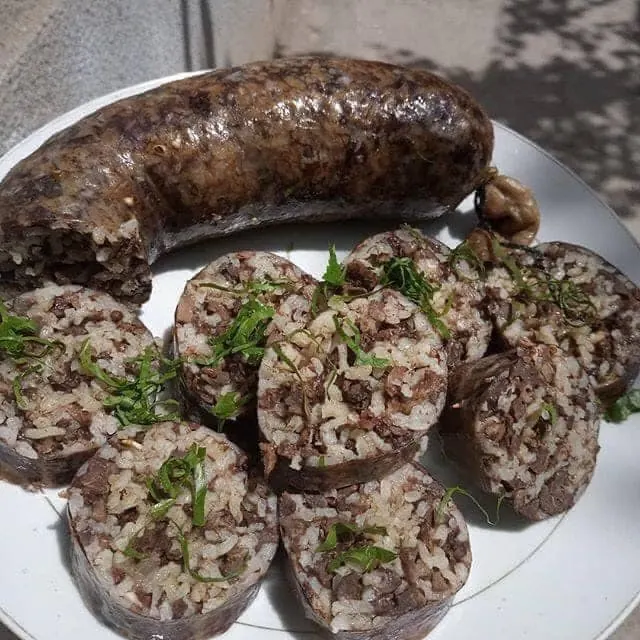
Photo: Barometr.kg, Reuse with author credit and a direct link; edited for this site.
A home version of lamb sausage with heart, liver, tail fat, rice and onion. The casing is filled loosely and cooked at a bare simmer.
Cuisine: Kyrgyz. Category: Simmered meat appetiser. Yield: 8 servings. Preparation: . Cooking: . Total time: .
Ingredients:
- 150 g chilled boneless lamb
- 275 g trimmed lamb heart
- 245 g lamb liver
- 160 g lamb tail fat
- 100 g onion
- 120 g rice
- 350 ml drinking water
- 120 g wide sheep casing, already cleaned and prepared for food use
- 12 g fine salt
- 1 g freshly ground black pepper
- additional drinking water for the pot
Method:
Step 1. Set aside a knife, board and bowl for raw meat. Rinse or soak the casing as directed by its supplier and keep it cold.
Step 2. Rinse the rice. Add 250 ml of the measured water, bring to a bare simmer and cook for 7 minutes. Remove from the heat and cool completely; the grains should still be firm.
Step 3. Finely dice the heart, liver and tail fat. Put the lamb through the coarse plate of a grinder, or chop it very finely with a knife. Dice the onion.
Step 4. Mix the lamb, offal, fat, onion, par-cooked rice, remaining 100 ml water, salt and pepper. Keep the filling chilled.
Step 5. Tie one end of the casing. Fill it to no more than three quarters of its capacity, releasing large air pockets so the rice has room to swell. Shape 2 or 3 short rings and tie the ends firmly.
Step 6. Bring a large pot of drinking water to the gentlest simmer. Lower in the byzhy, prick only visible air pockets with a thin clean needle and maintain a bare simmer for 50 to 60 minutes.
Step 7. Check the centre of the thickest ring with a clean thermometer. It must reach at least 71°C. If it has not, keep cooking and check again every 5 minutes.
Step 8. Transfer the byzhy with clean tongs and rest it for 10 minutes before slicing. Cool leftovers, seal them in a container and refrigerate within two hours.
Frequently asked questions about byzhy
Does byzhy always contain blood?
No. Blood is common in many family and regional versions, but bloodless recipes also exist. The Chuy version below uses lamb, heart, liver, tail fat, rice and onion.
How does byzhy differ from chuchuk?
Byzhy is usually made with lamb, chopped offal, fat and grain in a sheep casing. Chuchuk is horse meat and fat, often left in long strips. Their cross-sections have very different textures.
Can you eat the casing?
A food-grade natural casing is edible after thorough cooking. If it is especially tough or you are unsure about it, remove the filling from the casing on your plate.
Where can I try byzhy?
It is more likely to appear at a family celebration, an ethnographic festival or a Kyrgyz restaurant than in an everyday canteen. Ask about blood, the types of offal and rice before ordering.
Can I use an artificial casing?
A wide food-grade casing rated for simmering can work for a home trial, although the flavour and bite will change. Follow the maker’s instructions and never use packaging that is not intended for food.
Why must byzhy be stuffed loosely?
Rice swells, while water and fat expand as they heat. Loose filling and the removal of large air pockets reduce the chance of the casing bursting in the pot.
Share on social media
If you found this guide useful, share it on social media. It takes a moment and helps more travellers discover the project. Thank you!
Anything to add?
Share your experience, leave a comment or suggest an improvement.