Contents:
What is maksym?
Maksym is made from crushed grain or flour, most often barley, wheat and maize. The grain base is cooked in water, cooled and fermented with lactic acid bacteria and yeast. The result is not a clear kvass, but a substantial drink with fine grain sediment.
There is no single compulsory combination of grains. Recipes change between families and regions. In 2025, the traditional knowledge and cultural contexts of making maksym in Kyrgyzstan were inscribed on UNESCO's Representative List of the Intangible Cultural Heritage of Humanity. UNESCO's description stresses the transmission of skills within families rather than one standard recipe.
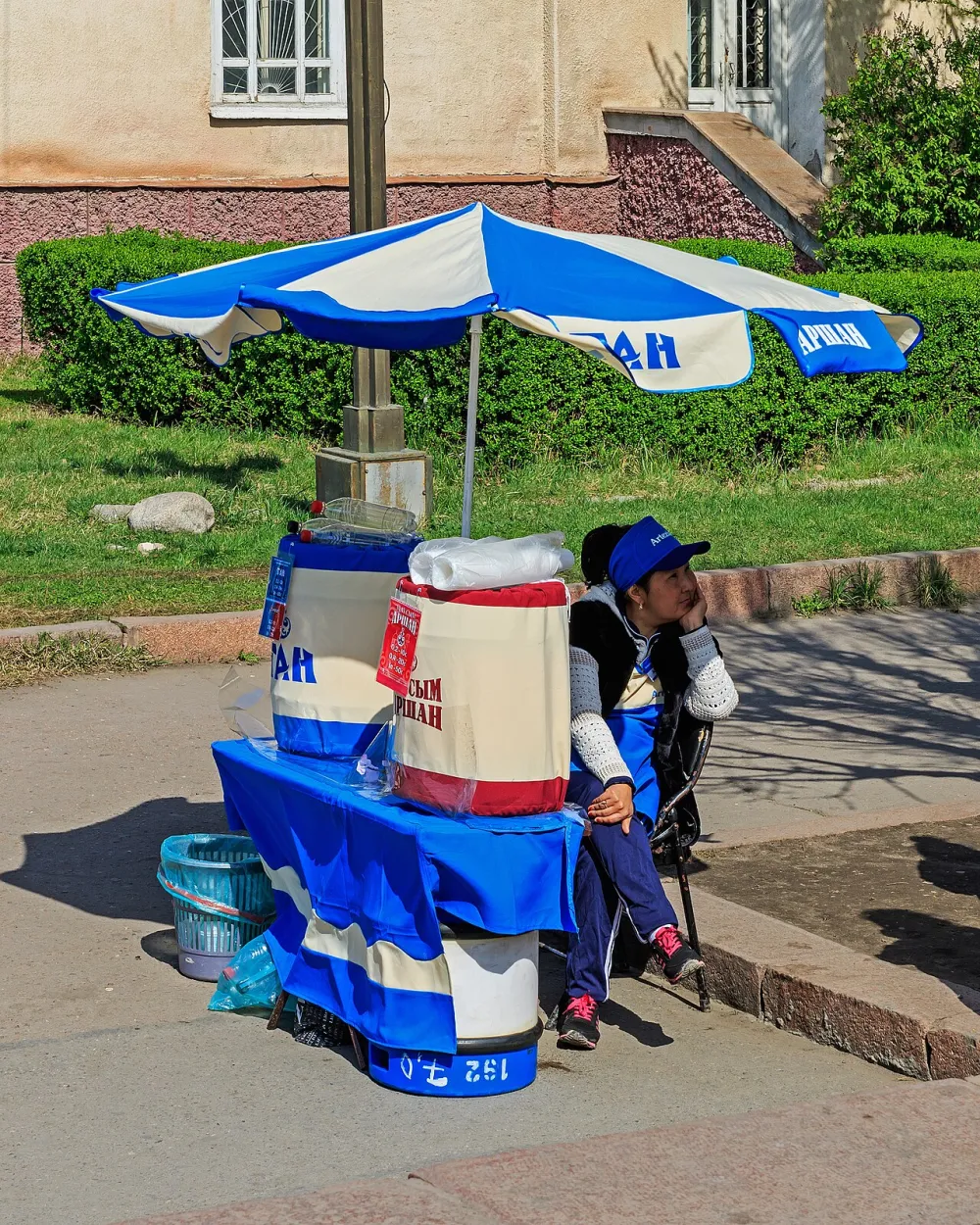 A street stand selling tan and maksym in Bishkek. Photo: A.Savin, Wikimedia Commons, Free Art License; edited for this site.
Maksym is often called “liquid bread”, but this is a metaphor. The drink does not replace a complete meal or acquire proven medicinal properties simply through fermentation.
How it is made
In the traditional process, flour or talkan is toasted, sometimes with a small amount of animal fat. The grain mixture is then combined with water and salt and cooked with constant stirring. Once cool, a working culture or part of a successful previous batch is added and the drink is left to ferment.
Industrial maksym follows the same broad logic with specified cultures and controlled conditions. For example, factory-made Maksym Shoro lists water, barley, maize, wheat, clarified butter, wheat flour, salt and yeast. This is the recipe for one product, not a rule for all maksym.
The home method only looks simple on paper. Quality depends on clean equipment, thorough cooking of the grain base, the temperature when the culture is added and the acidity of the finished drink. A random mixture of yoghurt and baker's yeast does not produce a predictable result. Without a proven culture, it is better not to attempt fermentation yourself.
What does maksym taste like?
Fresh maksym is tart, floury and grainy, with light carbonation. Toasted flour gives it a bread-like aroma and a colour ranging from beige to light brown. Sediment is normal: the drink is stirred before serving rather than filtered until clear.
An extremely strong yeast smell, the bitterness of rancid fat or a swollen bottle are not required signs of an “authentic” drink. Such packaging may have overheated or continued to ferment actively.
Maksym differs from bozo in its process and flavour. Malt is particularly important in bozo, where it breaks down starch and creates sugars for subsequent fermentation. Maksym generally feels lighter and appears more often in summer, while thick bozo is traditionally associated with the cold season.
How to choose and drink maksym
In Bishkek, maksym is sold bottled and on draught. A small factory bottle is convenient for a first taste because it shows the ingredients, date and storage temperature. When buying on draught, choose a stall with a chilled container, clean tap and rapid turnover.
Check the allergens. Barley and wheat contain gluten, while some recipes include clarified butter or another dairy ingredient. Read the label if you avoid alcohol strictly as well: yeast fermentation can produce traces, and the word “traditional” does not state an exact strength.
Before serving, gently invert the bottle several times to lift the sediment. Do not shake vigorously, and open it slowly. Maksym is drunk cold in small portions, either by itself or with hot dishes such as beshbarmak or lagman.
How to serve ready-made maksym
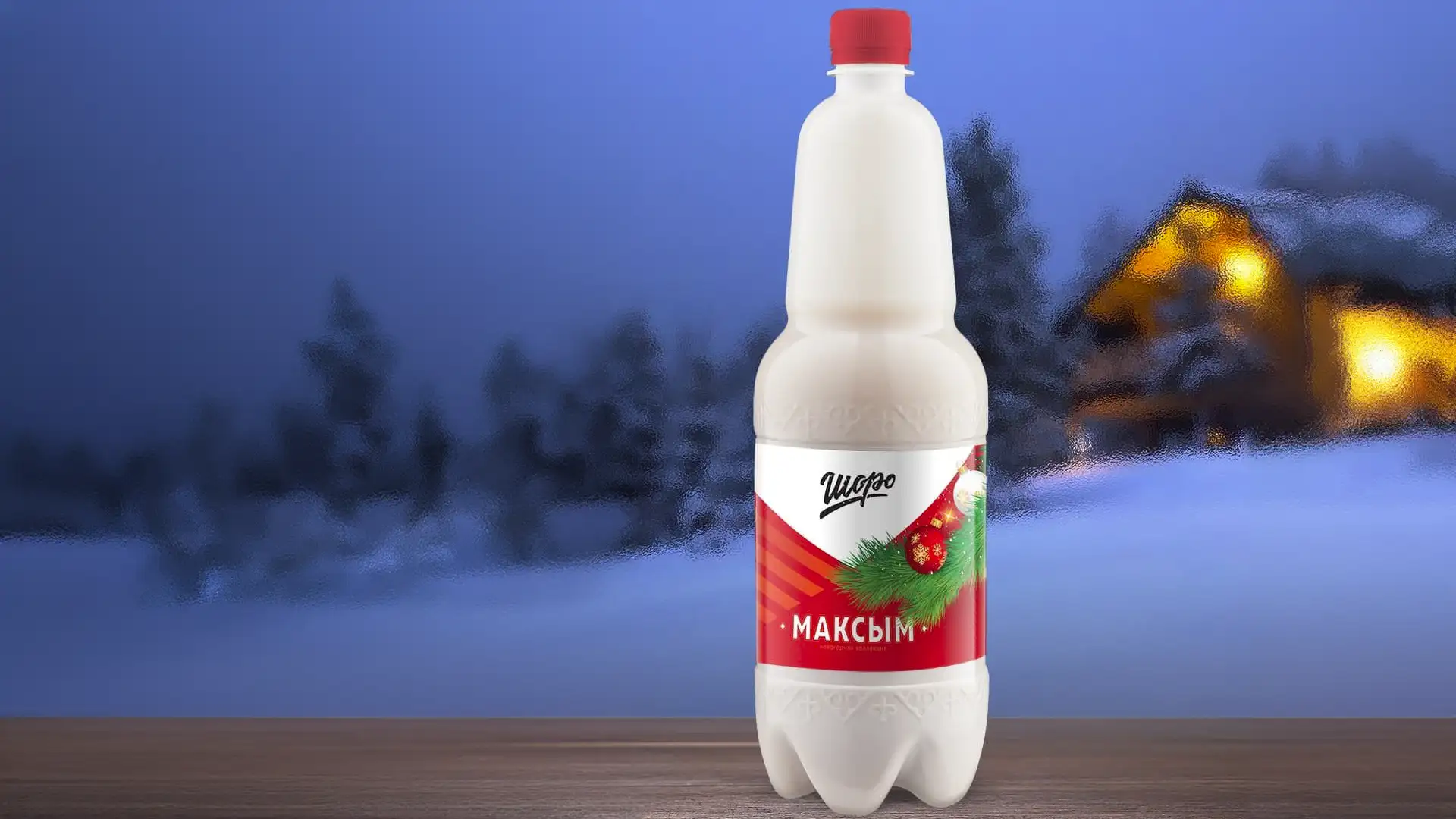
Traditional maksym fermentation requires a working mixed culture and a controlled process. For a first taste, a ready-made chilled product with clear ingredients is the safer choice.
Cuisine: Kyrgyz. Total time: 10 minutes.
What you need:
- 1 litre chilled maksym in intact, labelled packaging
- 4 clean bowls or glasses
Serving method:
Step 1. Check the use-by date, ingredients, allergens and storage temperature on the label. Do not use a swollen bottle.
Step 2. Chill the maksym according to the producer's instructions. Do not leave it in a hot car or direct sun.
Step 3. Gently invert the closed bottle several times to distribute the natural grain sediment. Do not shake it.
Step 4. Open the cap slowly and release excess gas. Pour small servings of 150-200 ml.
Step 5. Return the remainder to the refrigerator immediately and use it within the producer's stated period for opened packaging.
Share on social media
If you found this guide useful, share it on social media. It takes a moment and helps more travellers discover the project. Thank you!
Anything to add?
Share your experience, leave a comment or suggest an improvement.