Contents:
What is bozo?
Bozo is made from grain porridge, malt and a starter culture. Wheat, millet, maize, oats or a mixture may form the base. The drink is opaque, thick and slightly floury, with a sweet-and-sour flavour and a yeasty aroma.
Related grain drinks with similar names are known in several countries, but Kyrgyz bozo has its own ingredients and methods. It is most often made and drunk in the colder months. Comparing it with beer explains the use of malt and alcoholic fermentation, but bozo has a different taste, texture and style of serving.
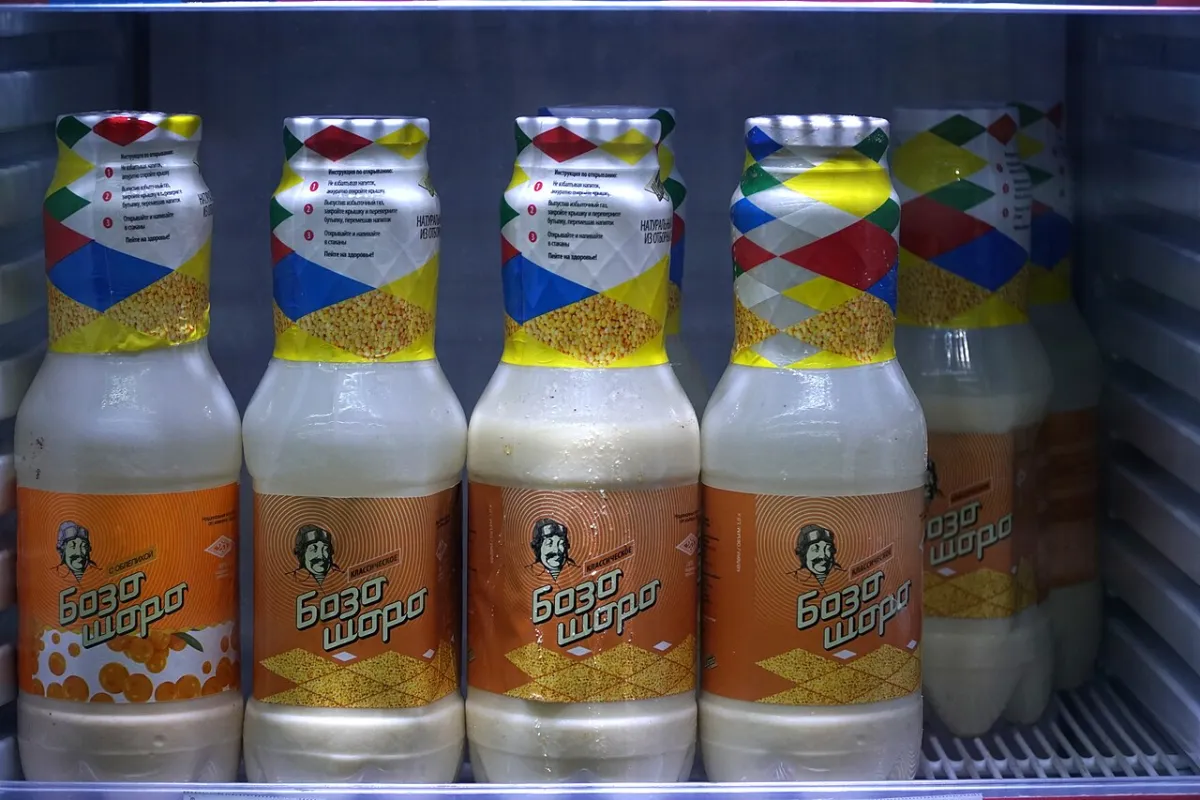 Bottled bozo in Karakol. Photo: Adam Harangozó, Wikimedia Commons, CC BY-SA 4.0; edited for this site.
Nutritional content depends on the grain, degree of filtration and residual sugar. Figures from one manufacturer cannot be applied to market or homemade bozo. The same is true of vitamins and health claims: the drink does not treat illness or automatically strengthen the immune system.
How it is made
The grain is first cleaned and cooked. Once it has cooled, ground malt is added to help convert some of the starch into fermentable sugars. A starter culture is then introduced, the mixture is left to ferment and finally filtered. Studies of Kyrgyz production identify this exact sequence: grain preparation, cooking, conversion with malt, fermentation, filtration and cold storage.
Simply soaking a raw grain mixture for a day does not replace this process. Without cooking, properly prepared malt and temperature control, the result may be microbiologically unsafe. A beginner is better off buying ready-made bozo and learning the traditional method alongside an experienced maker.
Maksym is also made from grain, but it is not the same as bozo. In bozo production, malt creates sugars and the subsequent fermentation has a noticeable effect on sweetness and alcohol content. Bozo is usually thicker and heavier in flavour.
How much alcohol does bozo contain?
Do not assume that bozo is alcohol-free. The amount of alcohol depends on the grain, action of the malt, starter culture, temperature and fermentation time. More available sugar and more active fermentation can result in a higher strength.
For example, the manufacturer Shoro gives a range of 2.5-4.5% alcohol for its Bozo-Shoro product. This applies to that particular product rather than bozo in general. Another bottle or homemade batch will contain a different amount, and without testing it is simply unknown.
Bozo is unsuitable for children, pregnant people, anyone about to drive and those who avoid alcohol completely. The old advice to drink it during pregnancy is unsupported and conflicts with a safe approach to alcoholic drinks.
How to choose and drink bozo
Start with factory packaging that lists the ingredients, strength, date and storage conditions. Check whether it contains wheat or barley, both of which contain gluten. The recipe may also include other grains and yeast, so the product name alone is not enough if you have an allergy.
Bozo must be kept cold. Do not buy a swollen, leaking or warm bottle. At a market, ask when the batch was made and how it is chilled. A strong rotten smell, mould or unusually coloured sediment are reasons to reject it.
Before serving, gently turn the bottle over to redistribute the sediment. Open it slowly because fermentation produces carbon dioxide. A first taste of 100-150 ml is enough, particularly when the precise alcohol content is unknown.
How to serve ready-made bozo
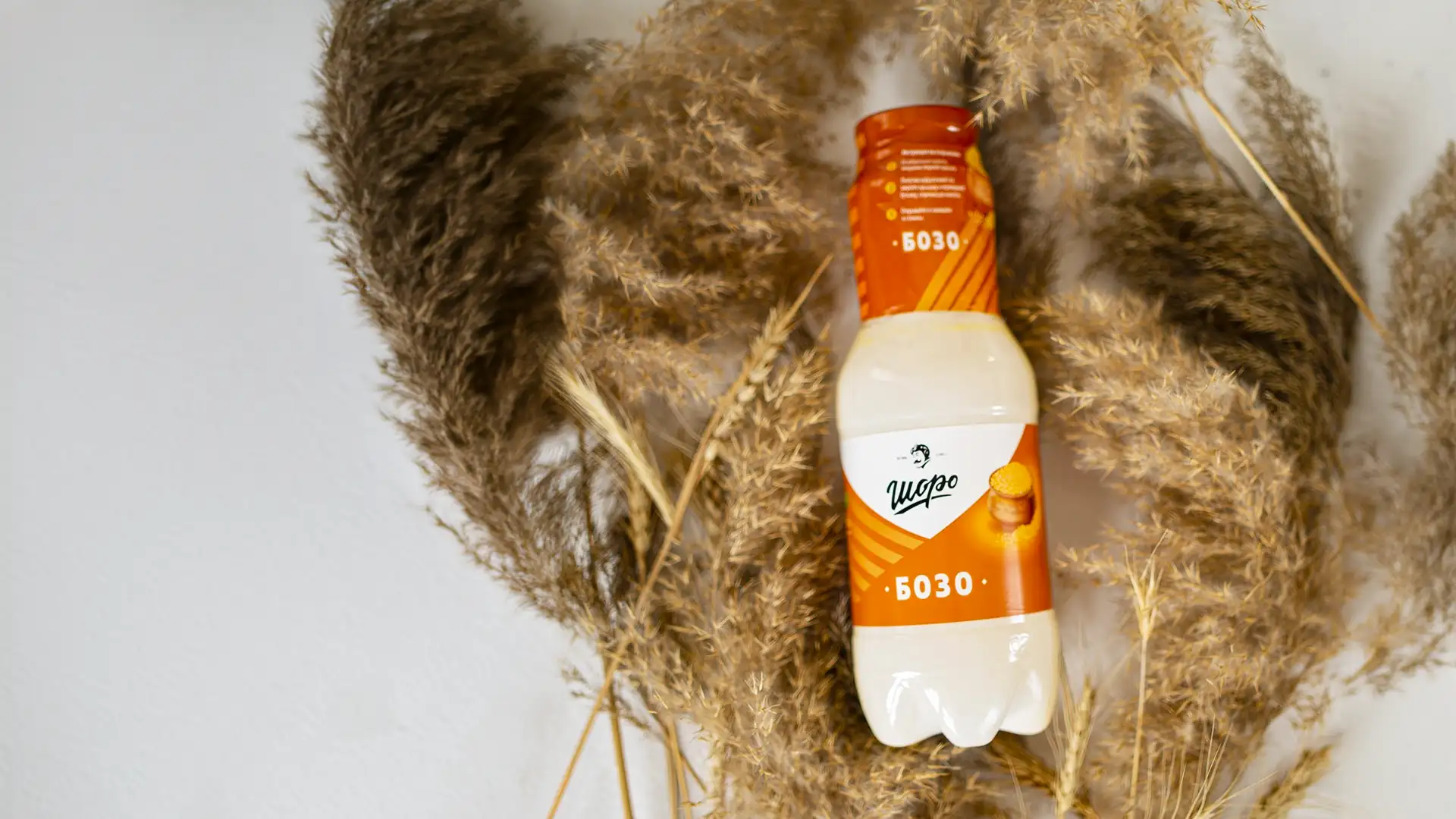
Bozo undergoes conversion with malt and alcoholic fermentation, so a simplified home recipe without process control is unsafe. This card explains how to choose and serve a ready-made drink.
Cuisine: Kyrgyz. Total time: 10 minutes.
What you need:
- 500 ml chilled bozo in intact packaging with the strength stated
- 4 small clean glasses
Serving method:
Step 1. Read the ingredients, strength, use-by date and storage instructions. Do not serve bozo to children, pregnant people or anyone who is about to drive.
Step 2. Make sure the bottle has been refrigerated and is not swollen. Do not use damaged packaging.
Step 3. Gently invert the closed bottle several times to distribute the grain sediment. Do not shake it.
Step 4. Stand the bottle upright and open it slowly to release the gas. Pour 100-150 ml into each glass.
Step 5. Serve cold. Return any remainder to the refrigerator immediately and follow the manufacturer's use-by period after opening.
Share on social media
If you found this guide useful, share it on social media. It takes a moment and helps more travellers discover the project. Thank you!
Anything to add?
Share your experience, leave a comment or suggest an improvement.