Contents:
What is dymdama?
Dymdama is a layered meat and vegetable dish that simmers slowly under a lid. Meat and onion sit at the bottom, firm vegetables go above them, and cabbage closes the top. Vegetable juices, meat fat and steam create the cooking liquid, leaving the result somewhere between a pot roast and a thick stew.
Menus may spell the name dymlyama, dimlama or damlama. These names lead to the same family of dishes, but not to an identical plate. One cook uses lamb and tail fat, another beef and vegetable oil. A summer pot may hold aubergine, pepper and tomato, while a winter version relies more heavily on potato, carrot and cabbage.
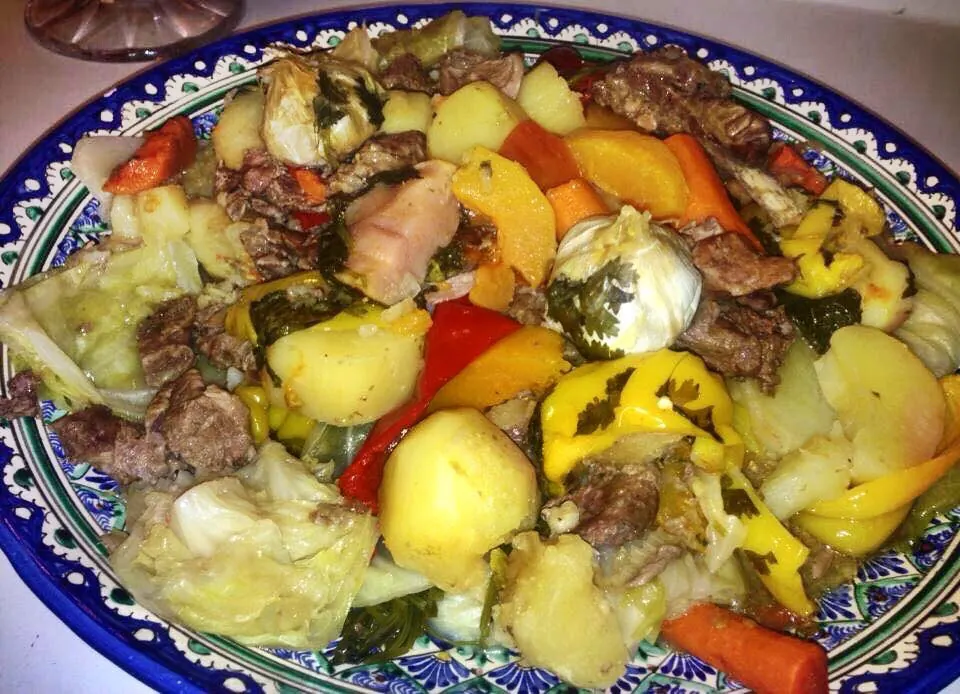 1/3. Dymdama with vegetables kept in large pieces Photo: mismailovs, Wikimedia Commons, CC BY 2.0; edited for this site.
 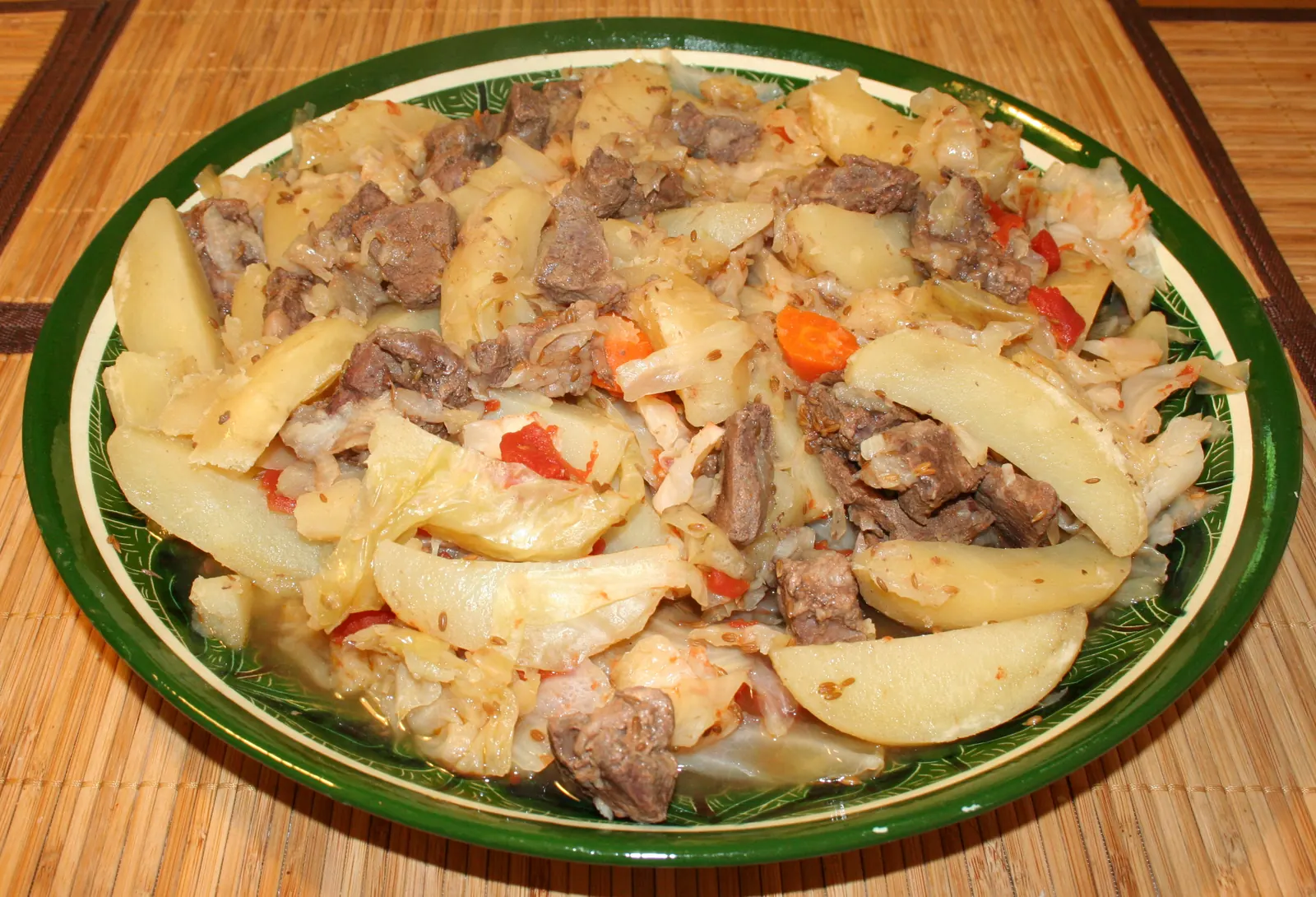 2/3. A version with soft cabbage and concentrated meat juices Photo: mismailovs, Wikimedia Commons, CC BY 2.0; edited for this site.
 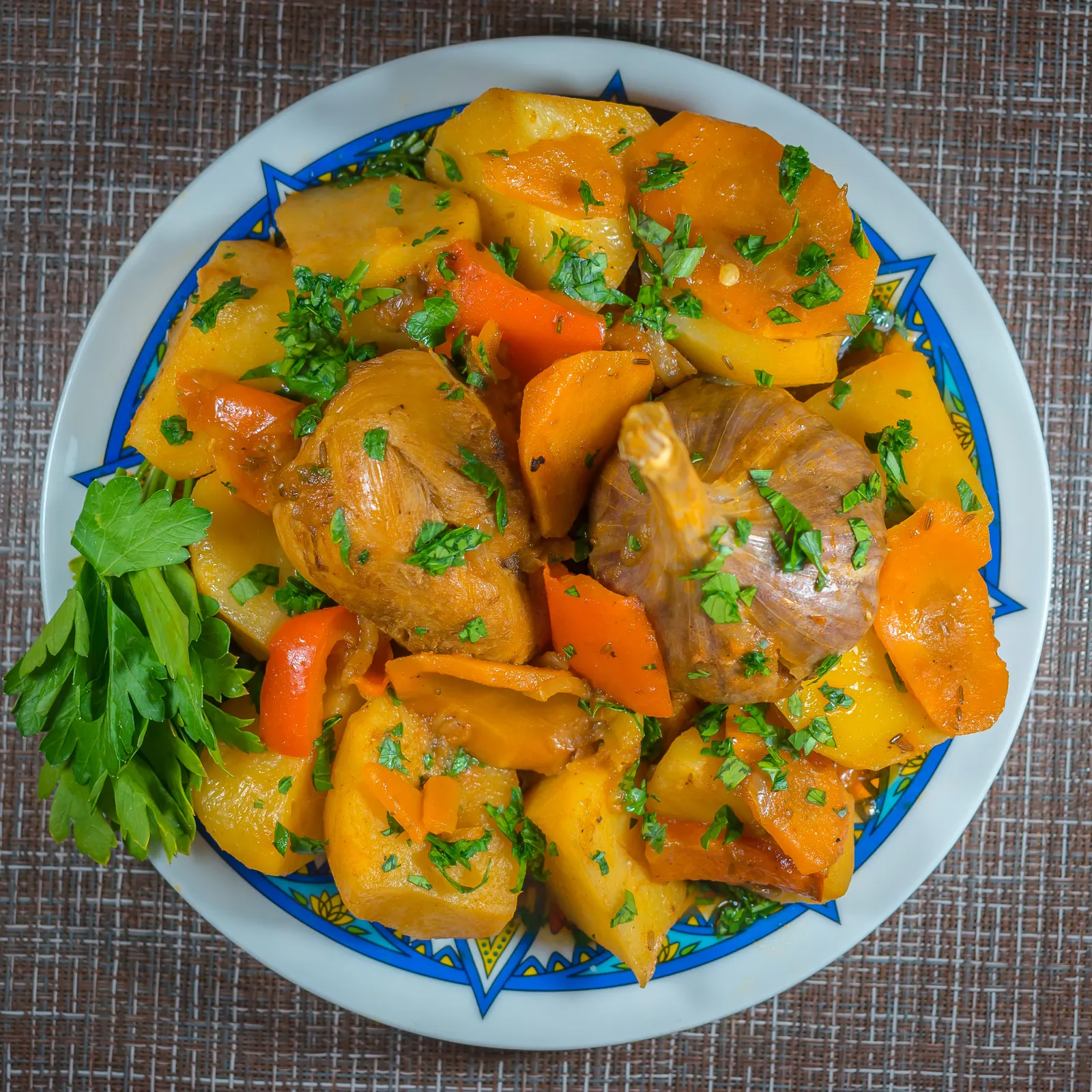 3/3. Dymdama with potato and carrot Photo: EugSan, Wikimedia Commons, CC BY-SA 4.0; edited for this site.
 Dymdama belongs to a broader Central Asian cooking tradition. In Kyrgyzstan, the useful story is its living local practice rather than a claim of exclusive origin. A recipe appears in a cookbook of updated Kyrgyzstan dishes developed with FAO, the Roza Otunbayeva Initiative, a government ministry and households in the Suzak district.
Which ingredients go into dymdama?
The meat layer usually starts with lamb or beef. Pieces with some fat tolerate a long simmer and release flavour into the bottom of the pot. Lean meat also works, but benefits from a little vegetable oil. Tail fat gives a stronger lamb character, although it is not essential.
The core vegetables are onion, carrot, potato, tomato, sweet pepper, aubergine, garlic and cabbage. Published Kyrgyzstan recipes also use broccoli, cauliflower, celery and quince. Treat this as a guide at the market: choose seasonal vegetables with a good aroma and enough structure rather than chasing a long checklist at any cost.
Juicy vegetables control the liquid. Ripe summer tomatoes and young cabbage release more water. In winter, the bottom can be drier, which makes fat, a tight lid and the lowest possible heat especially important.
The vegetables are cut large. A medium potato is halved, carrots become thick batons, aubergine and pepper remain in substantial pieces, and cabbage is divided into wedges. This size lets the vegetables spend well over an hour in the pot without losing their separate identities.
How do the layers work in a kazan?
First, brown the meat and onion in a small amount of fat. This bottom layer receives the strongest heat and starts the meat juices. The heat then drops, and the vegetables are stacked rather than fried in separate batches.
Carrot and potato sit closer to the meat because they need more time. Aubergine, sweet pepper, tomato and garlic go above them. Cabbage leaves form an inner lid across the top, holding in steam and protecting the softer vegetables from drying out.
Salt and spices are divided between the layers. Dymdama is then left unstirred until it is ready. Lifting the lid every ten minutes releases steam and can leave the bottom frying dry. A glass lid is convenient, but only one feature matters: it must seal the pot well.
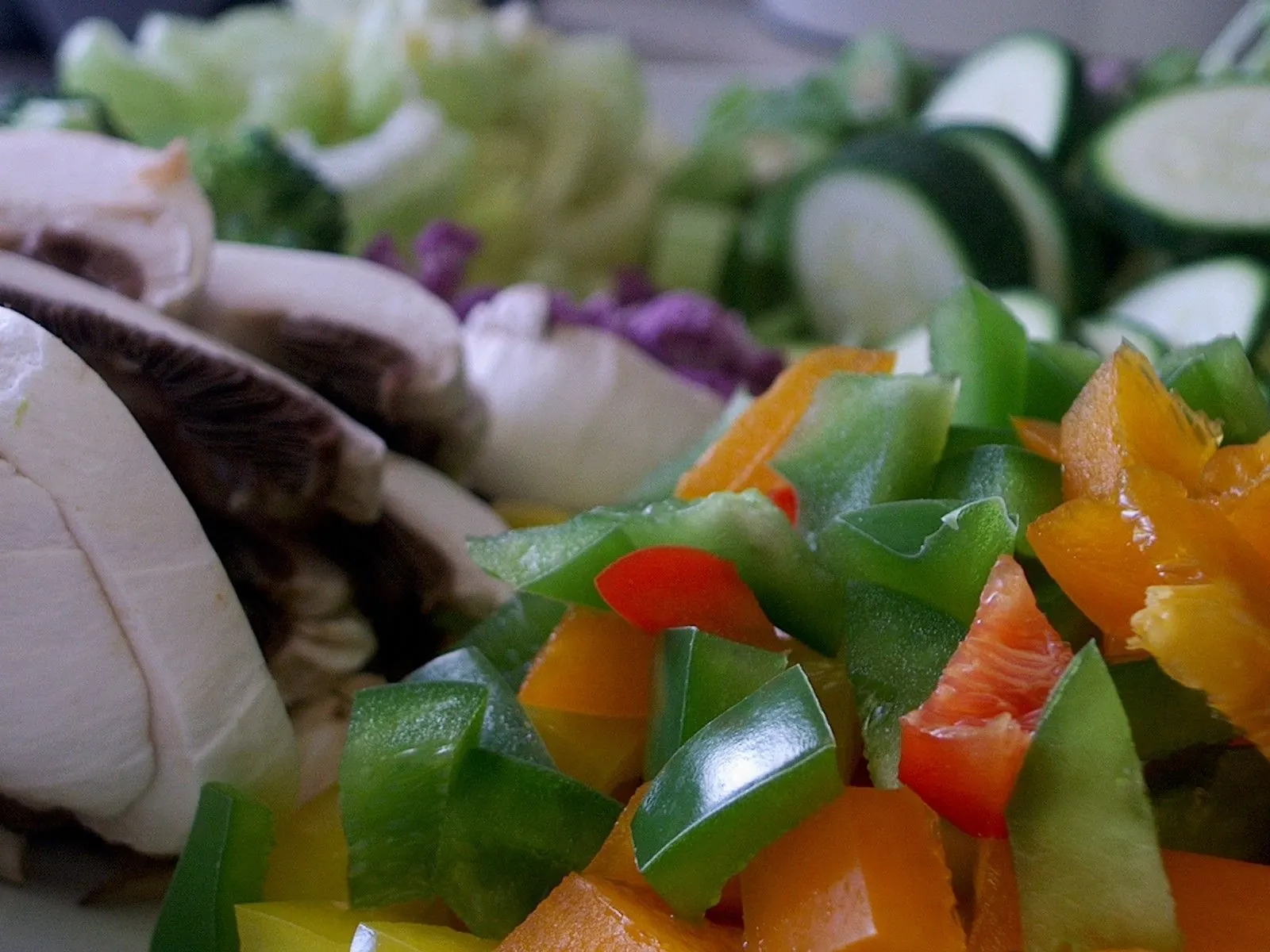 1/3. The vegetables keep a deliberately large cut Photo: Alastair M. Robinson, Wikimedia Commons, Public domain; edited for this site.
 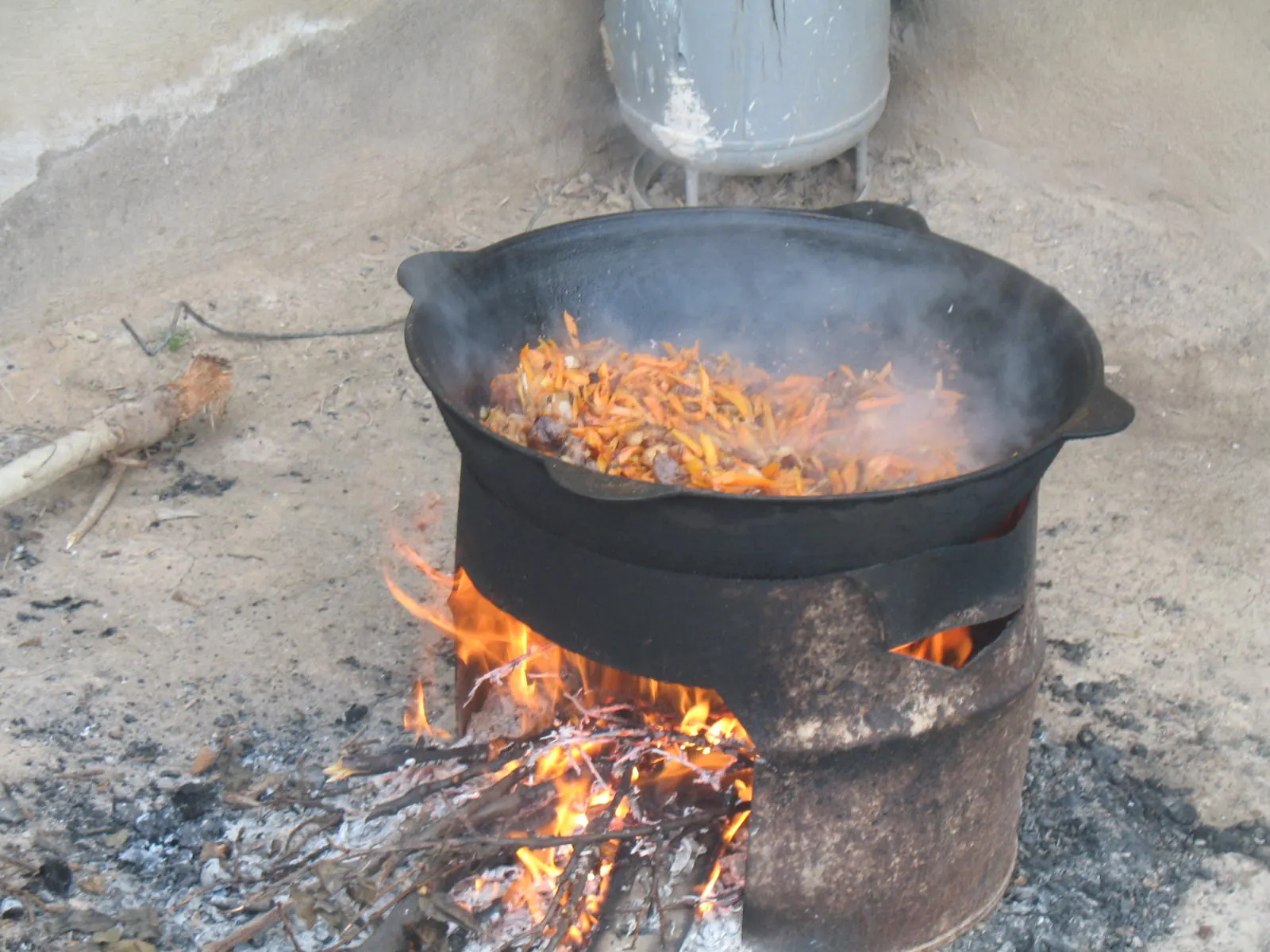 2/3. A kazan over an open fire in the Chuy Region Photo: Firespeaker, Wikimedia Commons, CC BY-SA 3.0; edited for this site.
 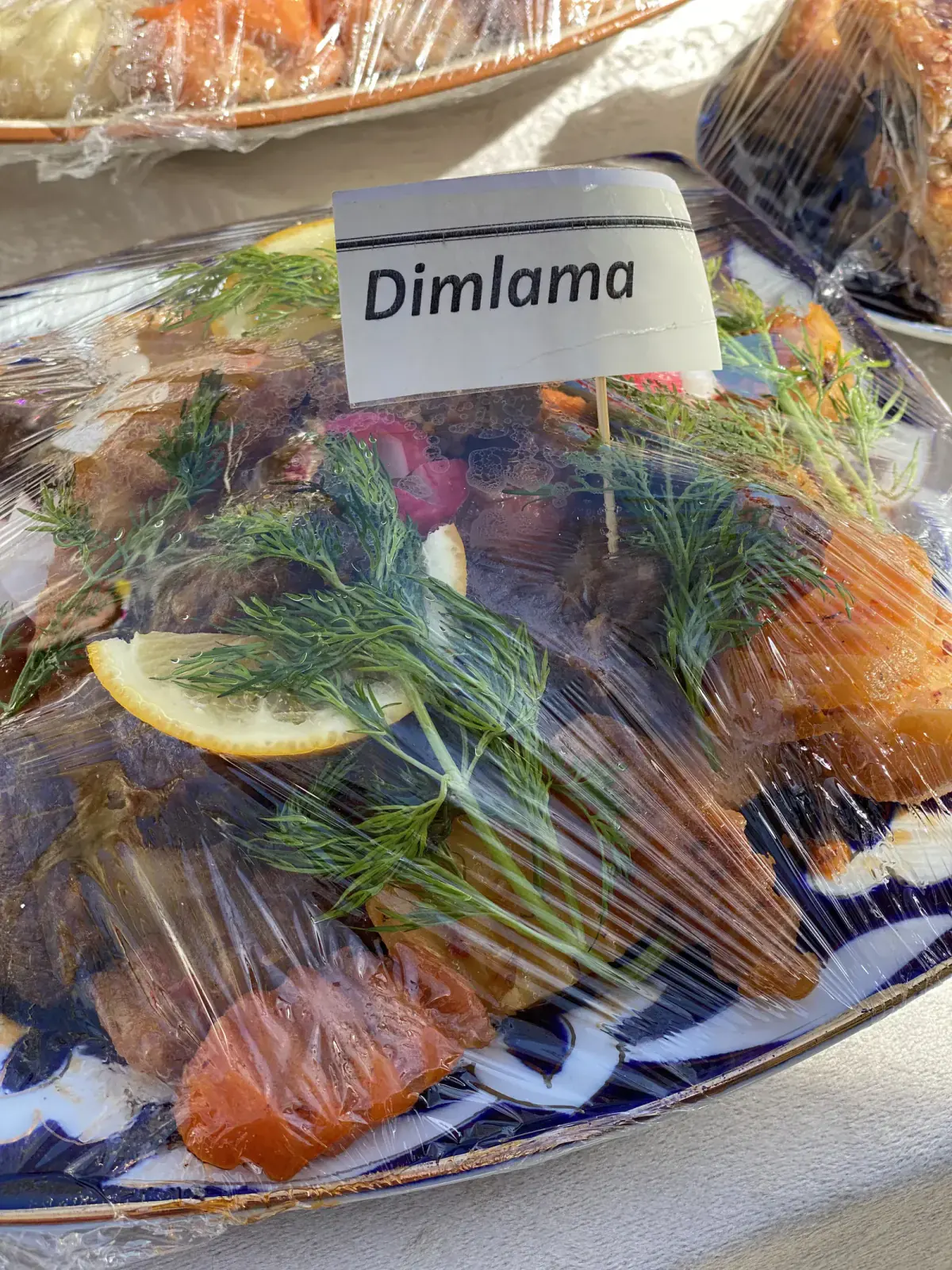 3/3. Dymdama also appears in modern takeaway formats Photo: Shahriyor06, Wikimedia Commons, CC BY-SA 4.0; edited for this site.
 How does dymdama differ from kuurdak and shorpo?
Ingredients are fried more assertively in kuurdak, so browned surfaces and fat drive the flavour. Dymdama mainly browns the lower meat layer, then relies on slow steaming in the vegetables’ own juices.
Shorpo is served as a soup with a clear quantity of broth. Dymdama stays a main course: meat and vegetables are arranged on a wide plate, with the concentrated liquid from the bottom spooned over them. Fresh tandoor bread is useful for catching that juice.
The ingredient lists can look similar. The distinction comes from heat, water and the lid rather than one particular carrot or potato. A bowl full of clear broth points towards shorpo. Prolonged active frying points towards kuurdak.
Where can you try dymdama, and what should you ask?
In Bishkek and Osh, look in restaurants specialising in Kyrgyz or Central Asian food. Dymdama is often cooked as one full kazan, so an individual serving may come from a shared batch. Ask which meat was used, whether it contains tail fat and how hot the pepper is.
Good dymdama keeps the vegetables recognisable. The potato is fully tender, the aubergine is cooked through, the meat separates easily with a spoon, and the bottom holds flavourful juice rather than a thin soup. A reheated serving should be hot in the centre, not only around the edge of the plate.
Ask separately for a vegetarian version. The absence of a visible piece of meat does not rule out tail fat or meat stock. At home, replace the meat layer with onion, carrot and extra aubergine while keeping the same covered, low-heat method.
How do you cook dymdama safely?
Cut raw meat on a separate board and do not return prepared vegetables to its bowl. Keep the lamb chilled until it goes into the pot. A kazan or casserole must stand securely: heavy cookware holding hot fat is particularly dangerous on an uneven burner or open fire.
Cooking time only estimates vegetable tenderness. USDA guidance sets 63°C in the centre plus a three-minute rest as the minimum for whole cuts of lamb. Dymdama normally takes the meat much higher, but a thermometer is useful for the thickest piece beside a bone.
A full kazan cools slowly. Do not leave leftovers in it until the morning. Divide them between shallow containers and refrigerate within two hours. When serving again, heat the meat, vegetables and juices through to the centre.
The recipe below combines the stable technique of two published Kyrgyzstan versions and gives weights for vegetables that were originally counted by piece. Nutrition figures are omitted because the final cooked weight and the amount of liquid left in the pot have not been measured in a test batch.
Dymdama with lamb and vegetables
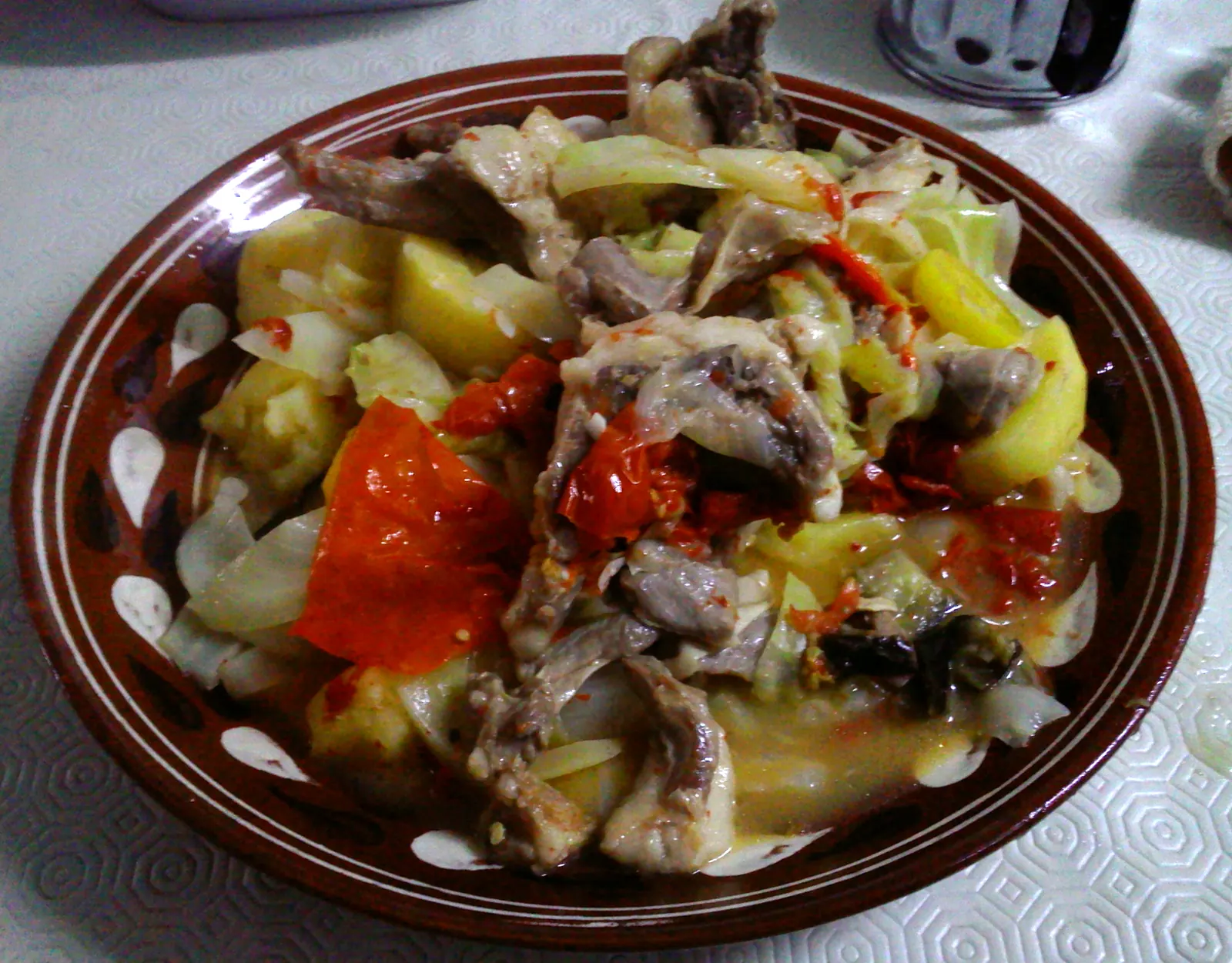
Photo: Arthoum, Wikimedia Commons, CC BY-SA 4.0; edited for this site.
A home version of the layered lamb stew with potato, cabbage, aubergine, tomato and sweet pepper. The vegetables cook under a tight lid without added water.
Cuisine: Kyrgyz and Central Asian. Category: Hot meat and vegetable main course. Yield: 6 servings. Preparation: . Cooking: . Total time: .
Ingredients:
- 600 g chilled lamb shoulder or ribs
- 30 ml vegetable oil
- 250 g onions
- 200 g carrots
- 600 g potatoes
- 300 g aubergine
- 300 g ripe tomatoes
- 200 g sweet pepper
- 400 g white cabbage
- 40 g garlic
- 12 g salt
- 2 g cumin seeds
- 1 g ground coriander
- 1 g freshly ground black pepper
- 20 g coriander leaves, parsley or basil, to serve
Method:
Step 1. Prepare a heavy casserole or kazan with a tight lid. Cut the lamb into pieces about 4 cm across on a separate board and keep it chilled while you prepare the vegetables.
Step 2. Cut the onions into thick half-moons and the carrots into large batons. Halve medium potatoes. Cut the aubergine, tomatoes and sweet pepper into large pieces, divide the cabbage into broad wedges and separate the garlic into cloves.
Step 3. Heat the oil over a medium flame. Add the meat in one layer and brown it for 7-8 minutes, turning the pieces. Add half the onion and cook for another 4 minutes.
Step 4. Lower the heat. Layer the remaining onion over the meat, followed by carrot, potato, aubergine, sweet pepper, tomato and garlic. Lightly season every second layer with the salt, cumin, coriander and black pepper mixture.
Step 5. Cover the vegetables with the cabbage wedges and press them down with a spoon. Do not add water. Seal the pot and wait until the juices begin to simmer, then reduce the heat to its lowest setting.
Step 6. Cook for 70-80 minutes without opening the lid during the first hour. Check the potato and the thickest piece of meat: the potato should pierce easily and the lamb must reach at least 63°C in the centre.
Step 7. Turn off the heat and leave the dymdama covered for 10 minutes. Arrange the potatoes and vegetables first, then the meat. Spoon over the juices from the bottom and finish with fresh herbs.
Step 8. Within two hours, divide leftovers between shallow containers and refrigerate. Heat the whole portion through to a hot centre before serving again.
Frequently asked questions about dymdama
Are dymdama and dimlama the same dish?
Yes. Dymdama, dymlyama, dimlama and damlama are names for closely related Central Asian dishes. The ingredients and order of the layers vary by country, region and household.
Do I need to add water?
Not for the version on this page. Tomatoes, onion, cabbage and the other vegetables release enough liquid when the lid fits tightly and the heat stays low. If steam escapes too quickly, fix the lid instead of turning the dish into a soup.
Can dymdama be made without meat?
Yes. Increase the amount of aubergine, cabbage, potato and sweet pepper, and begin with onion and vegetable oil on the bottom. This keeps the same layered steaming technique in a vegetable dish.
What can I use instead of a kazan?
Choose a heavy casserole or Dutch oven with a thick base and a close-fitting lid. A thin pan scorches the bottom layer more easily, so it needs especially low heat and preferably a heat diffuser.
Why are the vegetables cut so large?
Large pieces hold their shape during the time the meat needs to become tender. Finely cut potato, aubergine and pepper would soften into a mash and lose their separate textures.
What is served with dymdama?
Dymdama is served hot with the juices from the bottom of the pot, fresh herbs and bread. It rarely needs another side dish because potatoes and other vegetables are already built into the meal.
Share on social media
If you found this guide useful, share it on social media. It takes a moment and helps more travellers discover the project. Thank you!
Anything to add?
Share your experience, leave a comment or suggest an improvement.