Contents:
What changed in the 2026 renovation
The museum reopened on 22 August 2026 after a complete renovation. The 159-million-som project renewed its services and interiors, repaired the complex and refreshed the exterior while retaining the character of Karakol's late nineteenth-century townscape.
It now makes a natural first stop in Karakol. The collection links Issyk-Kul archaeology, nomadic material culture, the history of the town and visual records from the 1930s. That introduction gives more meaning to the mosque, cathedral, market and timber houses encountered later in the day.
Every photograph on this page predates the renovation. The images accurately record the historic form of the building and earlier displays, but paintwork, entrances, cases and the arrangement of objects may have changed after 22 August 2026.
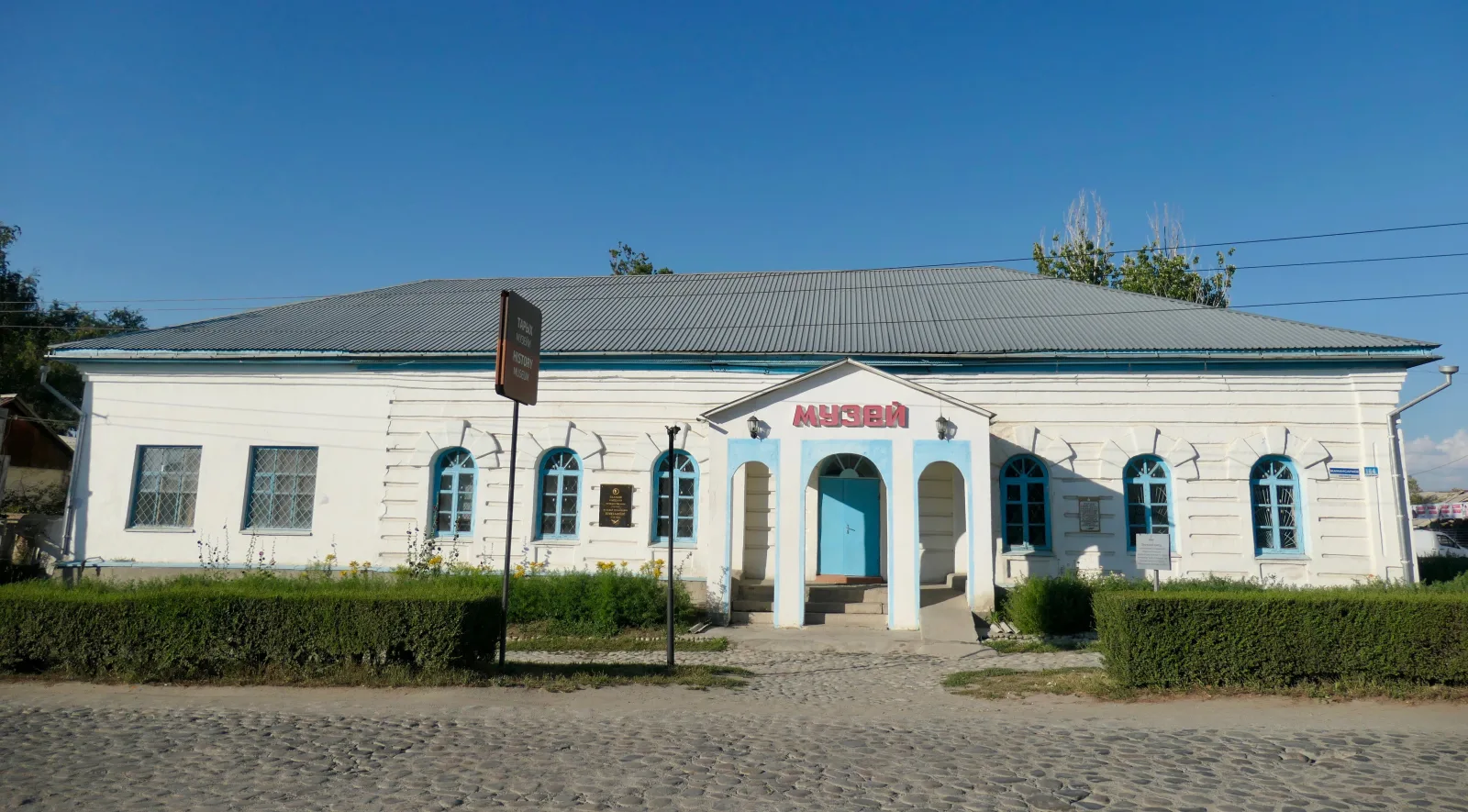 The main facade before the 2026 renovation. Photo: Bruno Rijsman, Wikimedia Commons, CC BY 2.0; edited for this site.
From merchant's house to museum
The stone house was built in 1887 for M. N. Ilyin, a Karakol merchant and livestock trader, as his family's summer residence. Rusticated walls, arched windows and a balanced facade place it among the surviving buildings of the old district town.
Its function changed repeatedly between 1918 and 1920. The district soviet and revolutionary committee used the premises, followed by a military commissariat, a House of Defence and a library. The building became a museum on 1 November 1948. Karakol City Council adopted the present historical and regional profile, usually translated as the Historical and Local Lore Museum, on 17 January 2001.
The house is therefore the first exhibit. It reveals the scale of a prosperous urban property, the relationship between its windows and the street and the compact pattern of the surrounding blocks. Aerial views make clear that the museum belongs to the everyday centre of Karakol rather than a detached monumental campus.
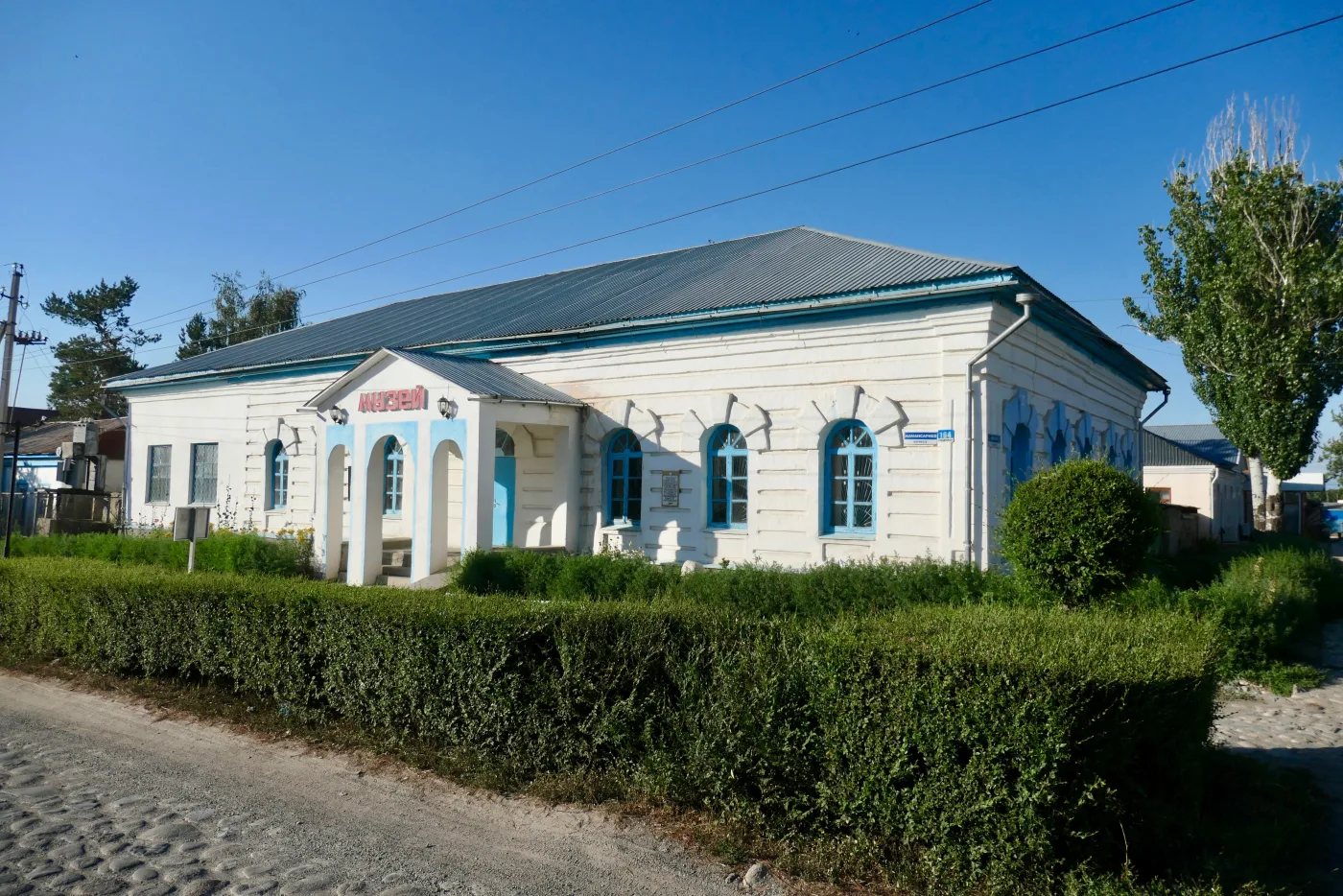 1/2. Side facade before the 2026 renovation Photo: Bruno Rijsman, Wikimedia Commons, CC BY 2.0; edited for this site.
 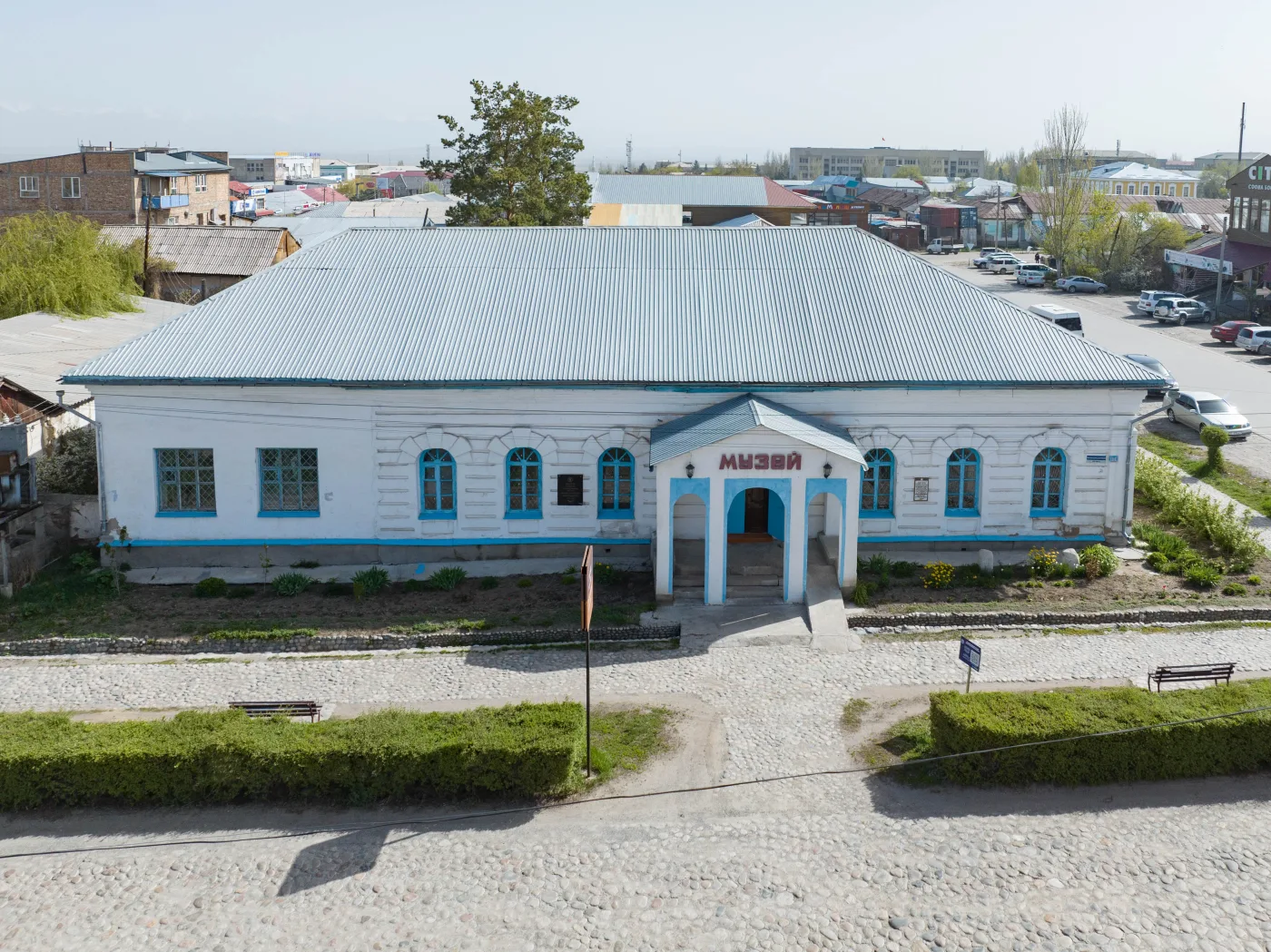 2/2. The museum in Karakol’s townscape before renovation Photo: Nikolai Bulykin, Wikimedia Commons, CC BY-SA 4.0; edited for this site.
 What the collection contains
The museum holds about 14,000 objects. The government announcement for the reopening lists archaeological finds, household and ethnographic material, weapons and tools, musical instruments, jewellery, horse tack, paintings and other records of the region.
The range matters more than a single showpiece. Archaeology supplies a long chronology for the Issyk-Kul basin. Textiles, felt, jewellery, instruments and riding equipment explain the material workings of nomadic life. Town records and photographs trace Karakol's development as a multilingual trading and administrative centre.
The room sequence may have changed during the renovation. Do not rely on an old plan to locate an "ethnography room" or a particular case. Ask at the entrance which sections and temporary exhibitions are currently open.
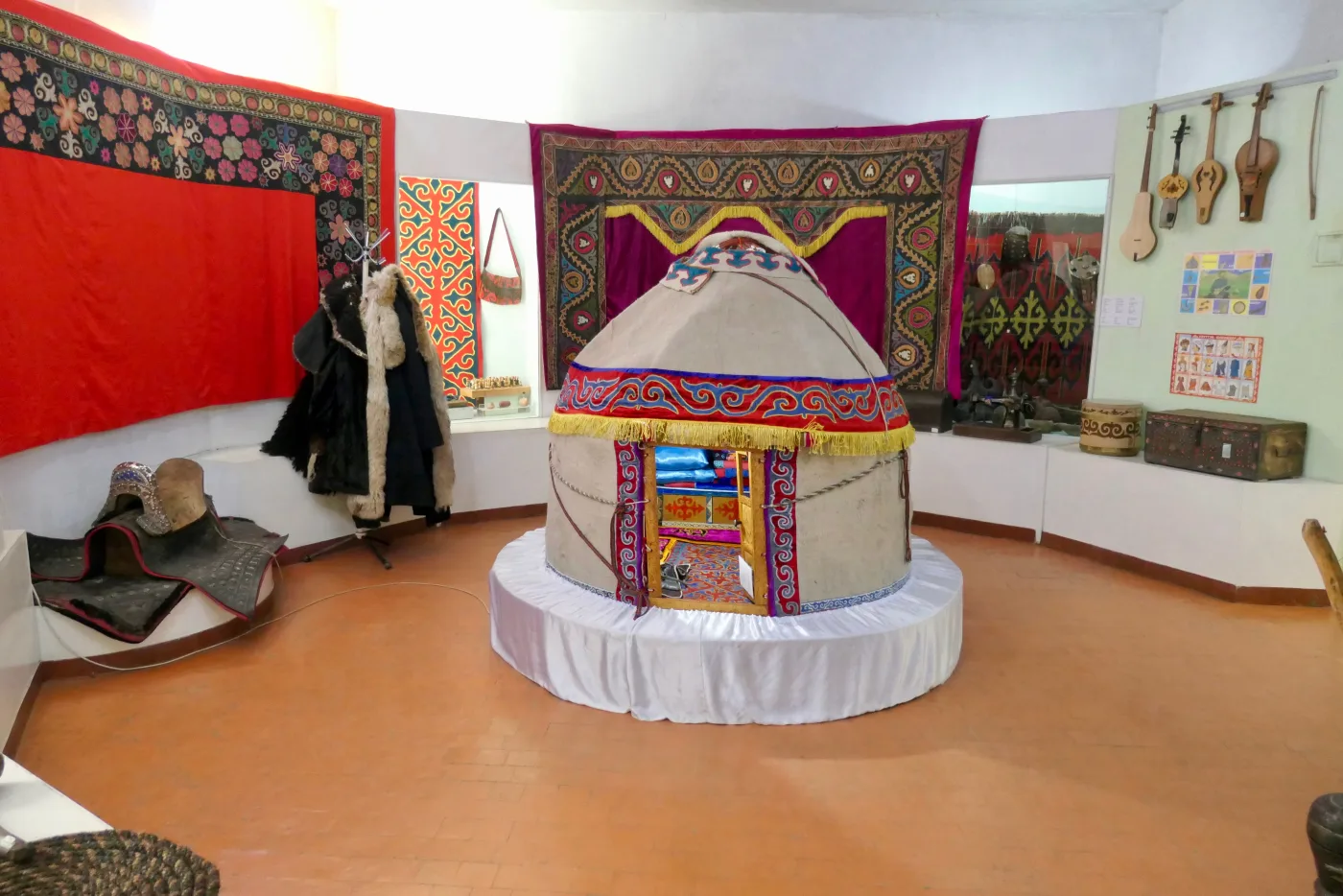 1/2. Ethnographic display before the renovation Photo: Bruno Rijsman, Wikimedia Commons, CC BY 2.0; edited for this site.
 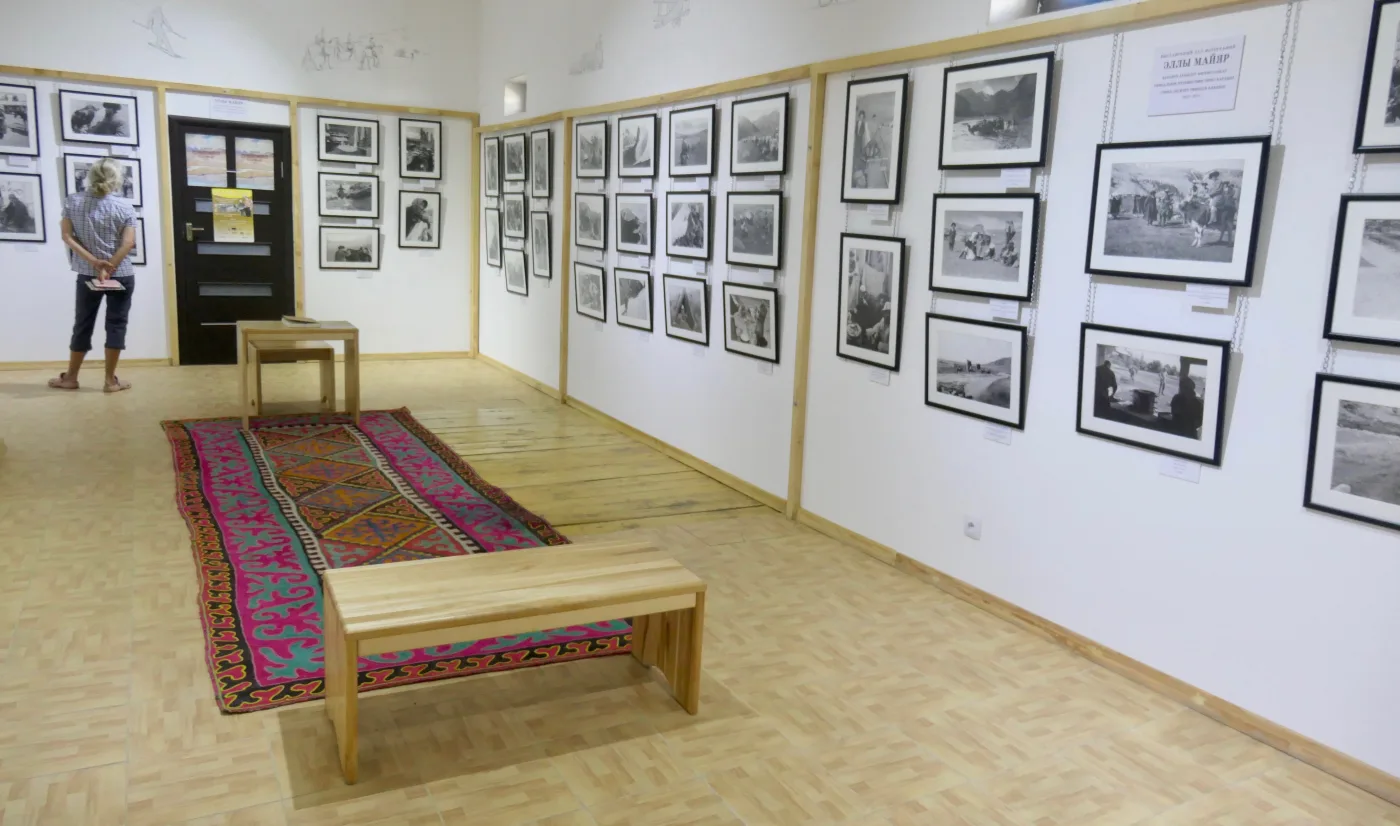 2/2. Ella Maillart gallery before the renovation Photo: Bruno Rijsman, Wikimedia Commons, CC BY 2.0; edited for this site.
 Ella Maillart's photographs
Swiss traveller, writer and photographer Ella Maillart entered Soviet Central Asia in 1932. Her journey took her through the Tien Shan and towards the Kyzylkum. She travelled alongside nomadic communities and photographed clothing, shelter, work, movement and landscape with the immediacy of life outside a museum case.
In June 2026, museum director Gulnaz Orozova described a collection of 110 Maillart photographs, most of them connected with Karakol. A dedicated exhibition opened here in 2016. The renovated display may use a different selection or layout, but the series remains one of the museum's best-documented holdings.
Look at the photographs alongside physical objects. An image shows a textile, tool or saddle in use; the case lets you examine its material and construction. The older IZI Travel audio guide is useful background, although its numbers and route may no longer match the renovated galleries.
How to approach a regional museum
Begin with three layers of time. The first reaches beyond the town through archaeology and the history of the Issyk-Kul basin. The second covers nomadic culture and Karakol's growth as a district centre. The third records how Soviet and post-1991 curators collected, classified and interpreted the past.
Objects grouped under "traditional life" may come from different decades, families and settlements. Read labels for a findspot, date of acquisition and material. Those details distinguish a specific piece of evidence from a general reconstruction of regional culture.
It is also worth comparing two forms of looking. A regional collection organises material by theme and period; Maillart's camera caught people and objects in motion. Together they create a richer account than either could supply alone.
Address, hours and tickets
The museum stands at 164 Zhamansariev Street, at the corner with Orozova Street. It is about a five-minute walk from Holy Trinity Cathedral and 15 to 20 minutes from the Dungan Mosque at an easy pace.
Post-renovation opening hours have not yet been published. As of 23 August 2026, there is no confirmed regular timetable or ticket price. Older listings contradict one another and should not be used for planning. Call +996 3922 53-268 or +996 552 669-623 before setting out.
Photography rules, guided-tour arrangements and step-free access have also not been confirmed since reopening. Ask by phone or at the ticket desk. A single-storey historic building does not automatically guarantee an accessible entrance, route or toilet.
The reopening and the broad contents of the collection are documented in the Kabar report of 22 August 2026.
How long to allow
The essentials
- Look at the historic facade and one archaeology section.
- Choose either ethnography or town history for a focused visit.
- Leave time for a small selection of Maillart photographs.
A good first visit
- Connect archaeology, nomadic material culture and the growth of Karakol.
- Read object labels as well as introductory panels.
- Compare surviving objects with photographs from 1932.
With a guide
- Confirm the availability and language of a guided tour in advance.
- Return independently to one section after the tour.
- Continue through Karakol’s historic centre on foot.
What to see nearby
The museum fits naturally between Holy Trinity Cathedral and the older commercial streets. Our Karakol guide sets out a practical order for the main stops, market and lunch. After seeing the collection, the timber houses, arched merchant facades and rectilinear street plan become part of the same historical narrative.
The Przhevalsky Museum is a different institution at Pristan-Przhevalsk, about 13 kilometres from central Karakol. It focuses on one explorer and his expeditions. The town museum covers Karakol and the wider Issyk-Kul region. More options appear in our guide to museums in Kyrgyzstan.
Frequently asked questions
Has Karakol History Museum reopened?
Yes. The museum formally reopened after renovation on 22 August 2026. A regular public timetable had not yet been published by 23 August, so call before visiting.
How much is admission?
A confirmed post-renovation ticket price has not yet been published. Older directories quote different amounts and are no longer reliable for planning.
What are the highlights?
The museum holds about 14,000 objects covering archaeology, ethnography, Karakol and the wider Issyk-Kul region. Ella Maillart's photographs of Central Asia in 1932 are a particularly well-documented part of the collection.
Is this the same as the Przhevalsky Museum?
No. Karakol History Museum is in the town centre and covers the city and region. The Przhevalsky memorial museum lies at Pristan-Przhevalsk, about 13 kilometres away, and focuses on the explorer and his expeditions.
May I take photographs inside?
The rules have not yet been published since the renovation. Ask at the ticket desk and check separately about flash, tripods, professional work and commercial photography.
Share on social media
If you found this guide useful, share it on social media. It takes a moment and helps more travellers discover the project. Thank you!
Anything to add?
Share your experience, leave a comment or suggest an improvement.