Contents:
Is Kant worth visiting?
Kant lies roughly 20 kilometres east of Bishkek on the flat floor of the Chüy Valley. It is the administrative centre of Issyk-Ata District and one of the region's industrial towns. There is no single landmark that demands a full day. The point of stopping is to see a working town just beyond the capital and to pair it with a drive into the foothills.
Two or three hours are enough for a first visit. Walk through the central streets, browse the bazaar, view the railway station from the public side and stop for lunch. If your plans do not include Issyk-Ata, Burana or another eastbound route, Kant rarely justifies a separate day.
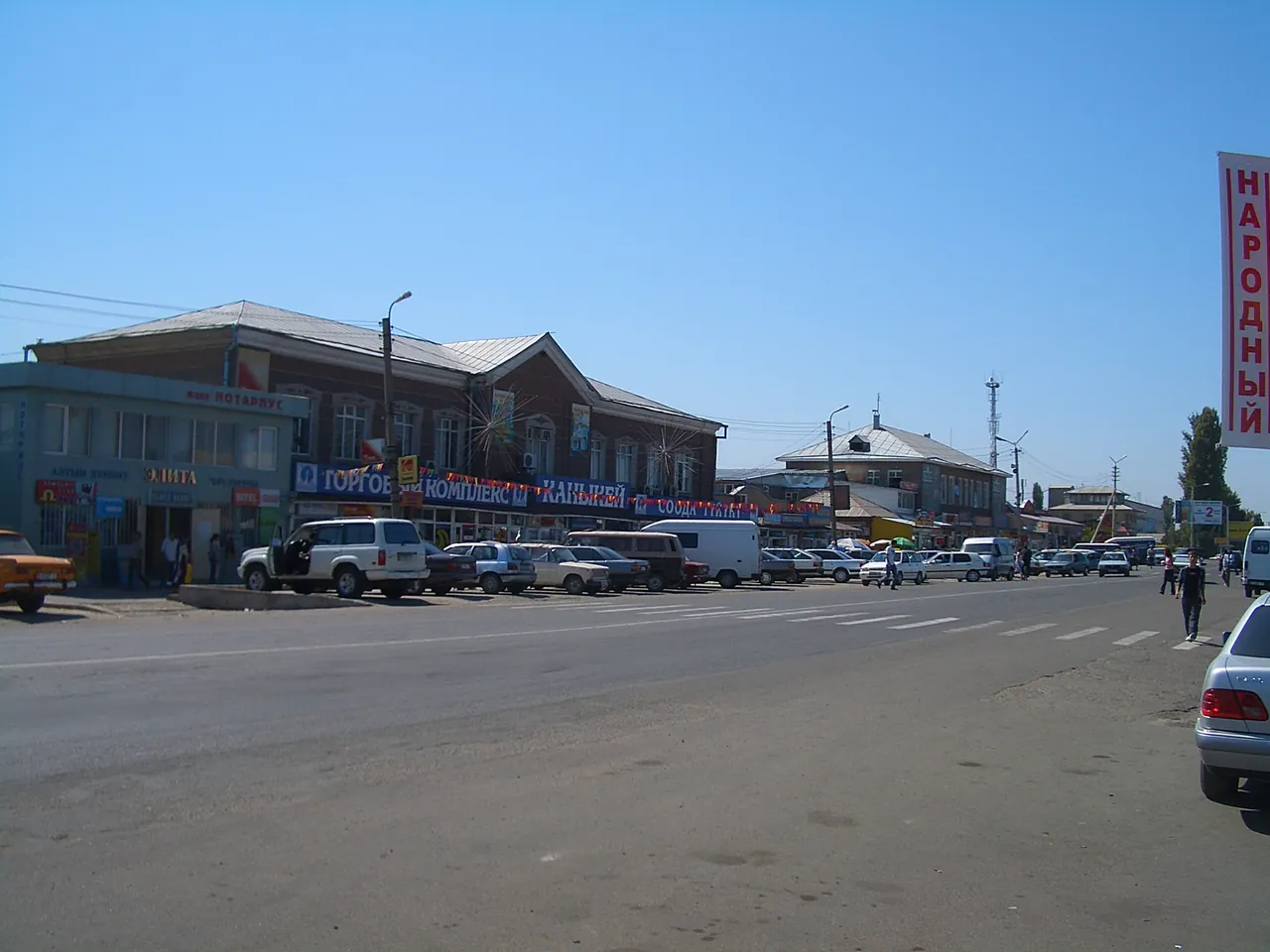 1/2. Central Kant Photo: Vmenkov, Wikimedia Commons, CC BY-SA 3.0; edited for this site.
 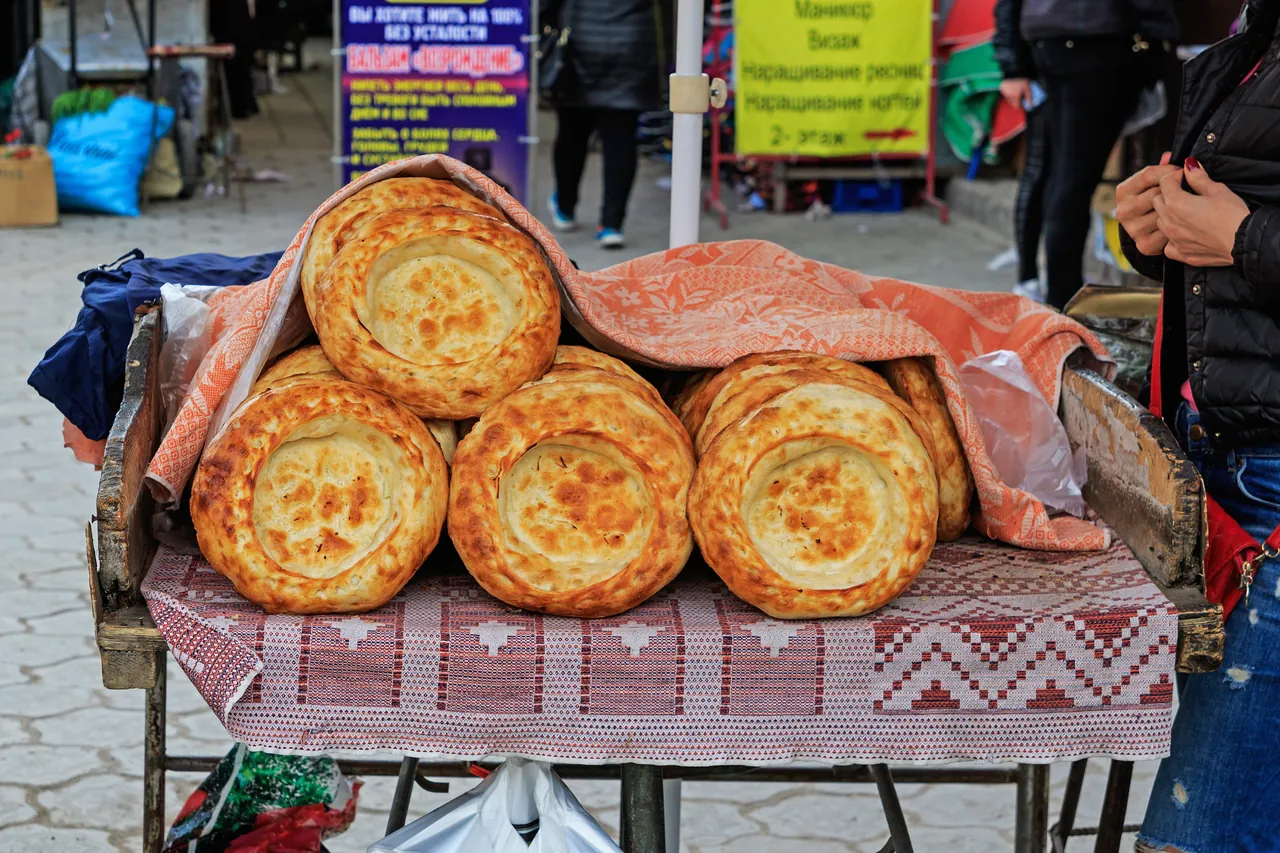 2/2. Flatbread at the town bazaar Photo: A. Savin, Wikimedia Commons, Free Art License 1.3; edited for this site.
 The name. Kant means sugar in Kyrgyz. The spelling happens to match the German philosopher's surname, but the town's name reads as a Kyrgyz word.
The centre, bazaar and everyday town life
The main streets. Begin in the central part of town and resist the urge to build a long checklist. Low-rise buildings, mature trees, Soviet civic architecture, shops and steady road traffic make up an honest portrait of Kant. Pavements are uneven in places, so the shortest line on a map may not be the most comfortable walk.
The bazaar. This is a useful stop for flatbread, fruit, dairy products and water before a trip into the valley. Visit in the morning and carry cash. Individual stalls keep their own hours and payment arrangements, so do not leave essential shopping until late evening.
The railway station. The railway helps explain Kant's position on the industrial corridor across the Chüy Valley. View it from the open town side, keep off the tracks and do not enter operational areas. Do not plan around a passenger train unless the Kyrgyz railway's current timetable lists a suitable service for your date.
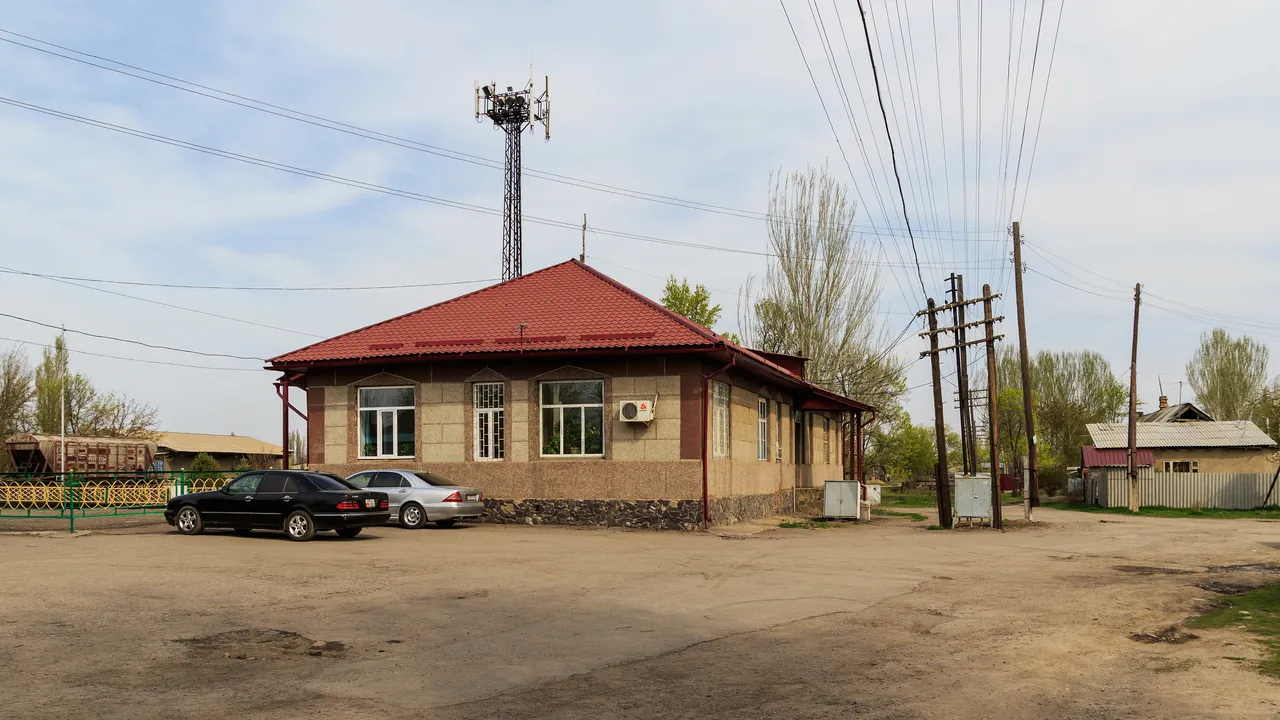 Kant railway station. Photo: A. Savin, Wikimedia Commons, Free Art License 1.3; edited for this site.
How industry shaped Kant
Kant City Hall gives 1928 as the town's foundation year and 1985 as the year it received city status. The municipality now lists cement, roofing materials, beverages and dairy processing among the main local industries. These are not visitor attractions, but they explain the freight railway, workers' districts and industrial edges of town.
The ceremonial Abdysh-Ata gate is one visible reminder of local manufacturing. You can see it from the public street. A sign at the entrance does not imply a factory tour, tasting or public access; any visit inside requires a separate arrangement with the company.
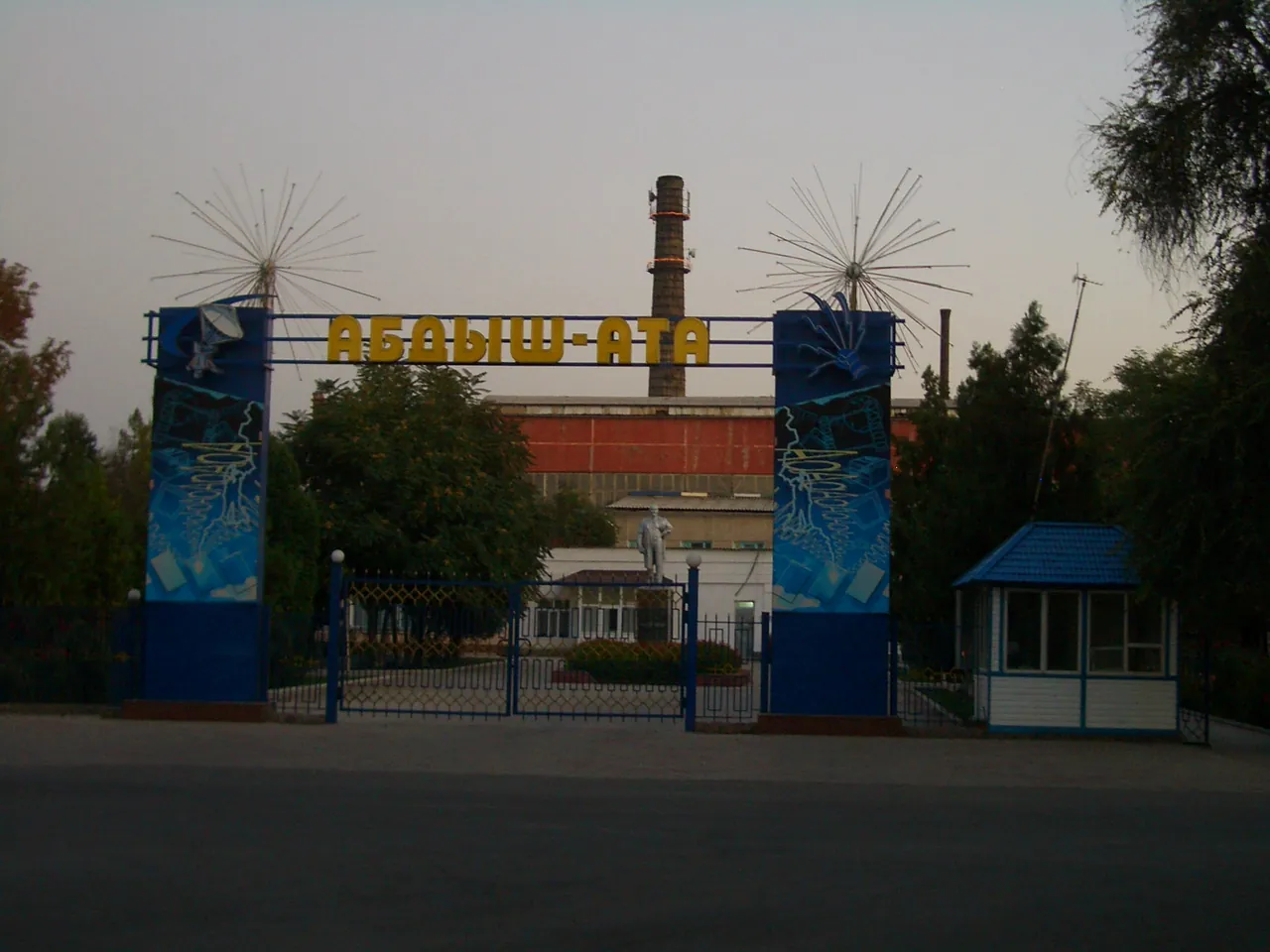 An industrial detail in the townscape. Photo: Vmenkov, Wikimedia Commons, CC BY-SA 3.0; edited for this site.
Military area. An active air base stands near Kant and is not part of the town itinerary. Do not look for an approach road, photograph fences or equipment, or fly a drone near the airfield. Keep an ordinary visit to the centre, bazaar, public streets and the accessible side of the station.
A two-hour or half-day walk
Two hours. Start in the centre, follow the main street to the bazaar and return to your bus stop through a parallel block. This loop gives a sense of the town without leading towards factory fences and leaves time for the journey back.
Half a day. Add the railway station, lunch and several quiet residential blocks after the bazaar. There is little value in collecting every factory gate. Kant's industrial character is clearer in the way the town works than in a view through a fence.
If you are driving, choose your parking spot before the walk and leave nothing visible in the car. In summer, start in the morning. In winter, allow for ice and early darkness, particularly away from the central streets.
Where to go from Kant
Issyk-Ata. The Issyk-Ata rural area lies about 35 kilometres from Kant. The gorge and spa are farther south in the foothills. Treat this as a separate drive in your own car or a pre-arranged taxi, not an extension of the town walk. Check the road, weather and return vehicle before leaving.
Tokmok and Burana. Continue east to Tokmok for the easiest onward trip to Burana Tower. If the archaeological site is your main goal, do not let an unplanned stop in Kant consume the afternoon. Burana needs daylight, museum time and a clear ride back.
Bishkek. Kant is simple to combine with a return to Bishkek. For most travellers, the capital remains the better base: it has far more accommodation and transport, while a brief visit to Kant does not require changing hotels.
Getting there from Bishkek
Kant sits just beyond Bishkek's eastern edge. Buses and marshrutkas run in this direction, but the exact stop, frequency and last return can change. Check the route in 2GIS or with local transport services on the day and show the driver the name Kant so you do not continue farther along the highway.
By car, allow roughly 40 to 60 minutes in light traffic. The morning and evening flow on Bishkek's east side can quickly change that estimate. If Kant is a stop on the way to Tokmok, budget real time for parking and the bazaar instead of trying to fit the town into an accidental ten-minute break.
Central Kant is walkable. Issyk-Ata and other foothill routes require a separate car with the return journey agreed in advance. Our Kyrgyzstan transport guide explains the broader options for intercity travel.
When to visit and whether to stay overnight
Spring and autumn are the easiest seasons for a town walk: the valley is milder and the mountains remain visible on the southern horizon. Summer is hot on open streets, so carry water and begin early. Kant remains accessible in winter, but short days and ice make walking less appealing.
An overnight stay is rarely necessary. Choose one only if you have found suitable accommodation, need an early start for Issyk-Ata or have a personal, academic or business reason to be here. For Burana and the road to Issyk-Kul, compare Kant with Tokmok; for a city programme and the widest transport choice, stay in Bishkek.
Share on social media
If you found this guide useful, share it on social media. It takes a moment and helps more travellers discover the project. Thank you!
Anything to add?
Share your experience, leave a comment or suggest an improvement.