Contents:
Which museum is inside the cave?
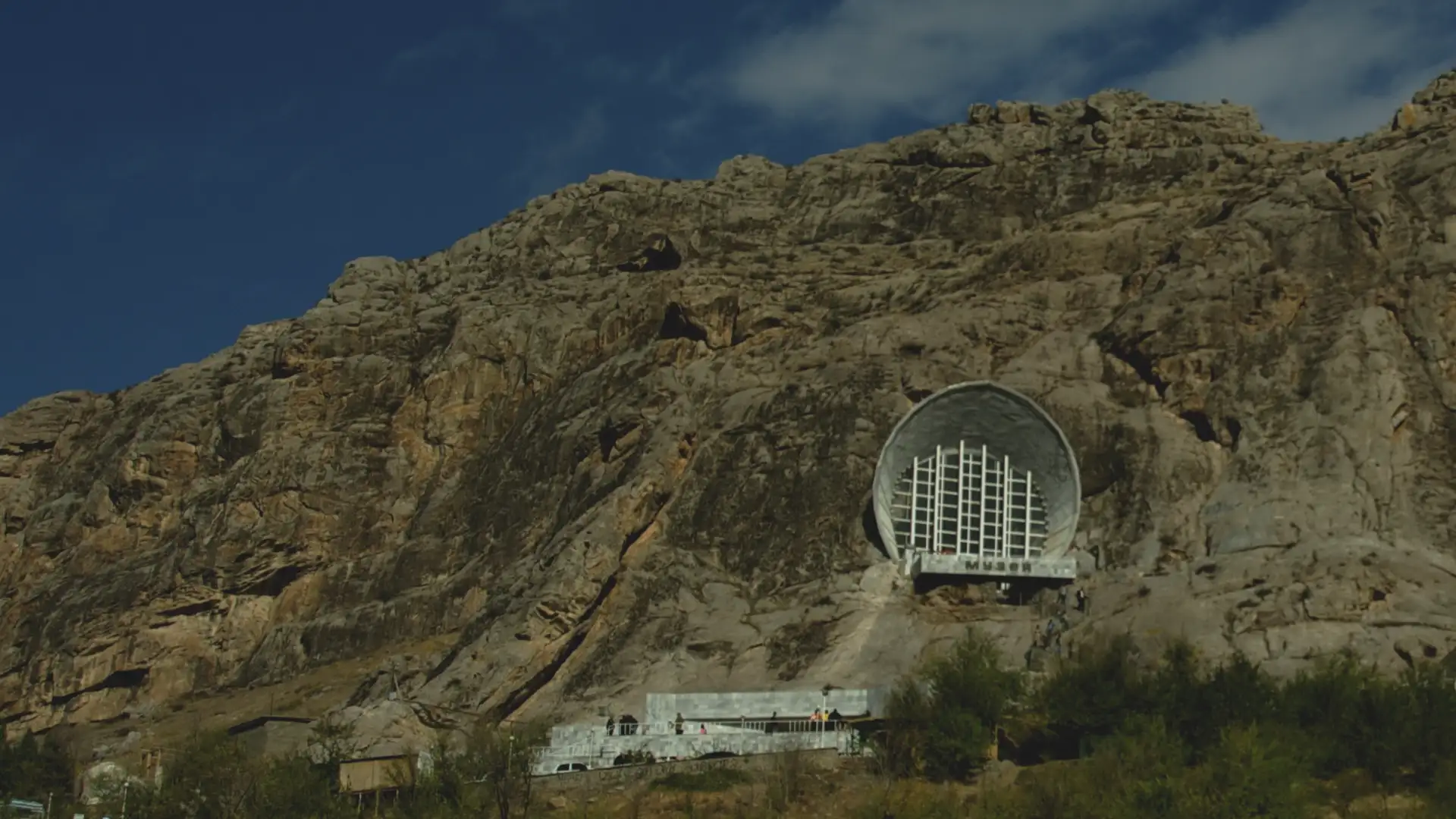
Sulaiman-Too has several museum sites. The large National Historical and Archaeological Museum stands at the eastern foot of the mountain. The separate Museum of Spiritual Culture occupies the Rushan-Unkur cave. The photographs on this page show this cave museum with its circular glass façade.
The distinction matters. The National Museum Complex holds tens of thousands of objects, but that does not mean they are all displayed inside the mountain. The cave collection has a narrower focus on religions, beliefs and ritual practices in southern Kyrgyzstan.
Getting there and preparing for a visit
Sulaiman-Too rises in central Osh. Take local transport or a taxi to the foot of the mountain, then walk towards the southern slope. The entrance to the cave museum and the main museum building are in different places, so compare the coordinates and signs before beginning the climb.
Inside are stairs, uneven rock surfaces and dimly lit areas. Wear shoes with a stable sole. If steps are difficult for you, ask about an accessible route in advance. The natural cave limits the possibility of step-free entry.
Check opening hours, tickets and guided-tour availability on the day of your visit. About an hour is enough for the cave museum itself, but a trip to Sulaiman-Too usually takes longer. Pilgrimage paths and sacred places continue across the mountain, which also offers views over the city.
What is inside?
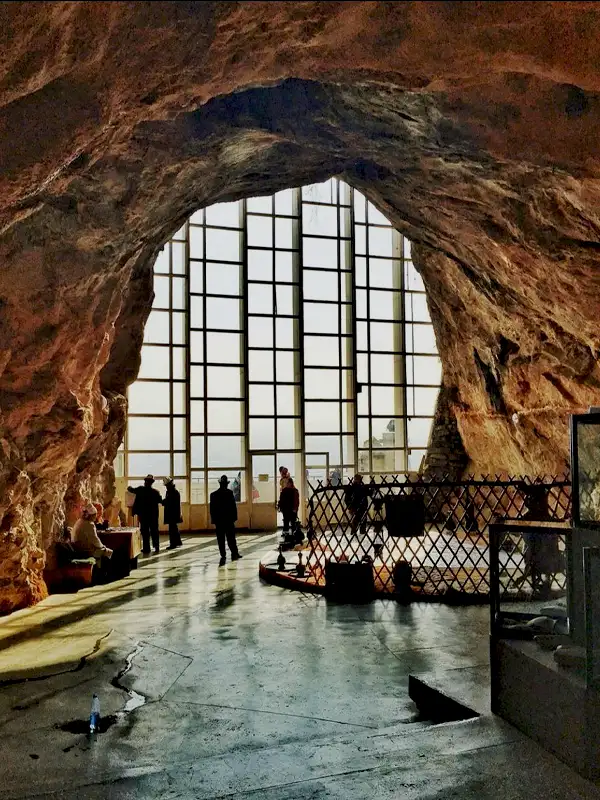 1/4. Gallery inside the Rushan-Unkur cave
 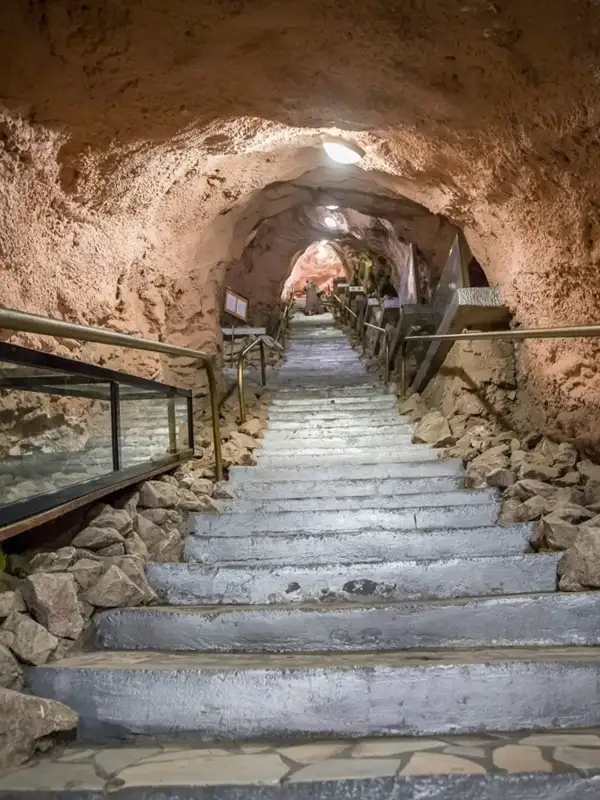 2/4. Stairs inside the museum
 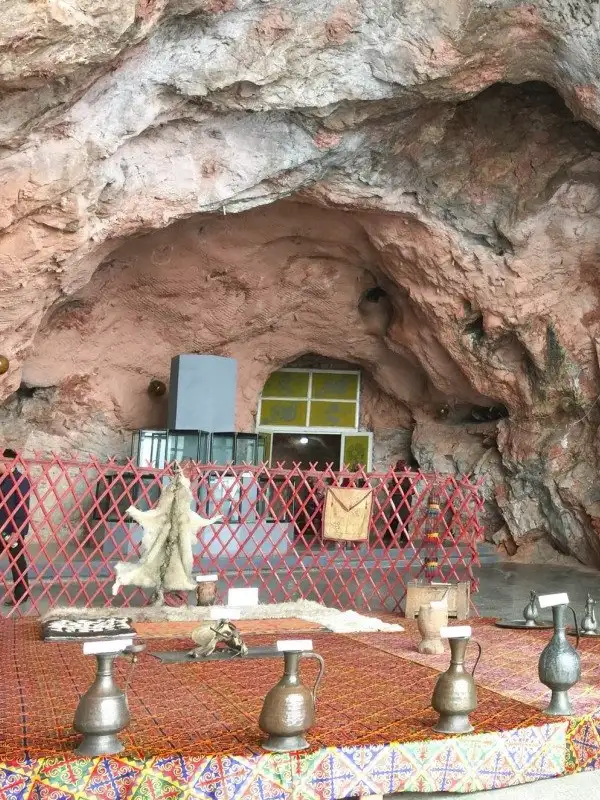 3/4. Objects of spiritual and everyday culture
 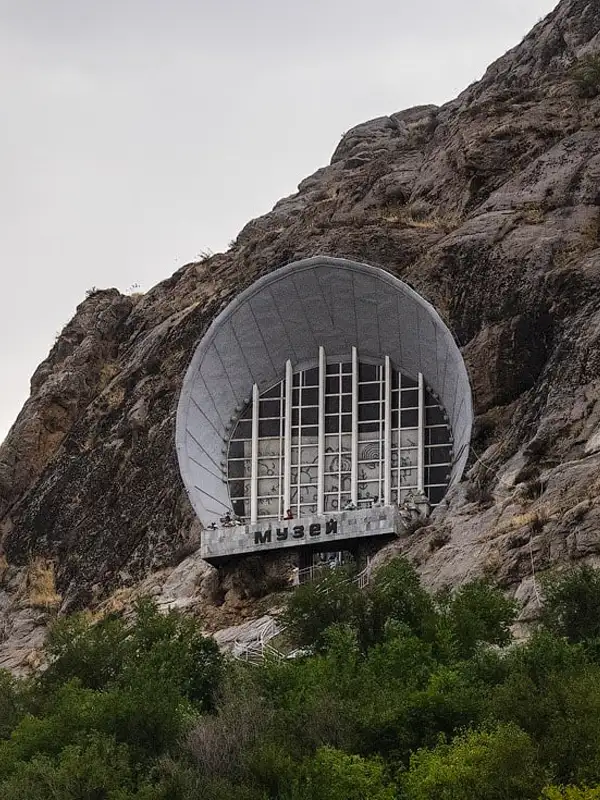 4/4. Museum built into the rock
 Architecture. The cave itself makes the strongest impression. Galleries use the natural walls and passages, while a large glazed opening closes the entrance and preserves a view over Osh. Stairs connect the levels, so the visit unfolds as a movement through the rock.
Beliefs in southern Kyrgyzstan. The displays show how pre-Islamic ideas, reverence for natural places and Islamic practices coexisted and changed. Do not merge them into one "ancient religion". The objects belong to different periods and traditions.
Ethnographic objects. Vessels, textiles, clothing and items connected with ritual culture appear in the galleries. Their labels or a guide explain their meaning. Household and sacred objects that look similar may have served different purposes.
The boundary between museum and sacred site. Beyond the glass façade is a living sacred mountain visited by pilgrims. It is not scenery for the museum display. Religious practice continues at Sulaiman-Too today and should be observed without intrusion or judgement.
Why Sulaiman-Too is a UNESCO World Heritage Site
In 2009, the entire sacred mountain of Sulaiman-Too was inscribed on the World Heritage List. The cave museum is only one part of a site that also includes five peaks, a network of ancient paths, petroglyphs, sacred places and later mosques.
The UNESCO World Heritage Committee noted that the mountain has been revered for at least 1,500 years and that its landscape preserves evidence of pre-Islamic and Islamic beliefs. The site's value lies in the complete system of places and its continuing tradition, not in the unusual form of the museum façade.
World Heritage status requires the protection of petroglyphs, paths and sacred places. It does not give visitors permission to leave official trails or touch ancient surfaces.
How to behave on the sacred mountain
Dress for an active pilgrimage site. Covered shoulders and knees show respect and also protect you from the sun. Do not photograph people at prayer without permission. Follow staff instructions if photography of a display or use of flash is prohibited.
Do not write on rocks, touch petroglyphs or remove pieces of stone. Give way on narrow stairs and do not cross barriers for a photograph. Carry water in hot weather, but take all packaging back down with you.
The cave museum focuses on spiritual culture, while the main building at the foot of the mountain covers the wider history of southern Kyrgyzstan. If time is short, choose the one that best matches your interest. With half a day, combine both museums with the Sulaiman-Too walking route.
Share on social media
If you found this guide useful, share it on social media. It takes a moment and helps more travellers discover the project. Thank you!
Anything to add?
Share your experience, leave a comment or suggest an improvement.