Contents:
What can you see without climbing?
Lenin Peak closes the southern side of the Alay Valley and is clearly visible from the Achik-Tash base camp area. Travellers without a summit goal also visit. You can stay in camp, walk over grassy slopes and moraines, view the glaciers and return without entering the high-altitude climbing route.
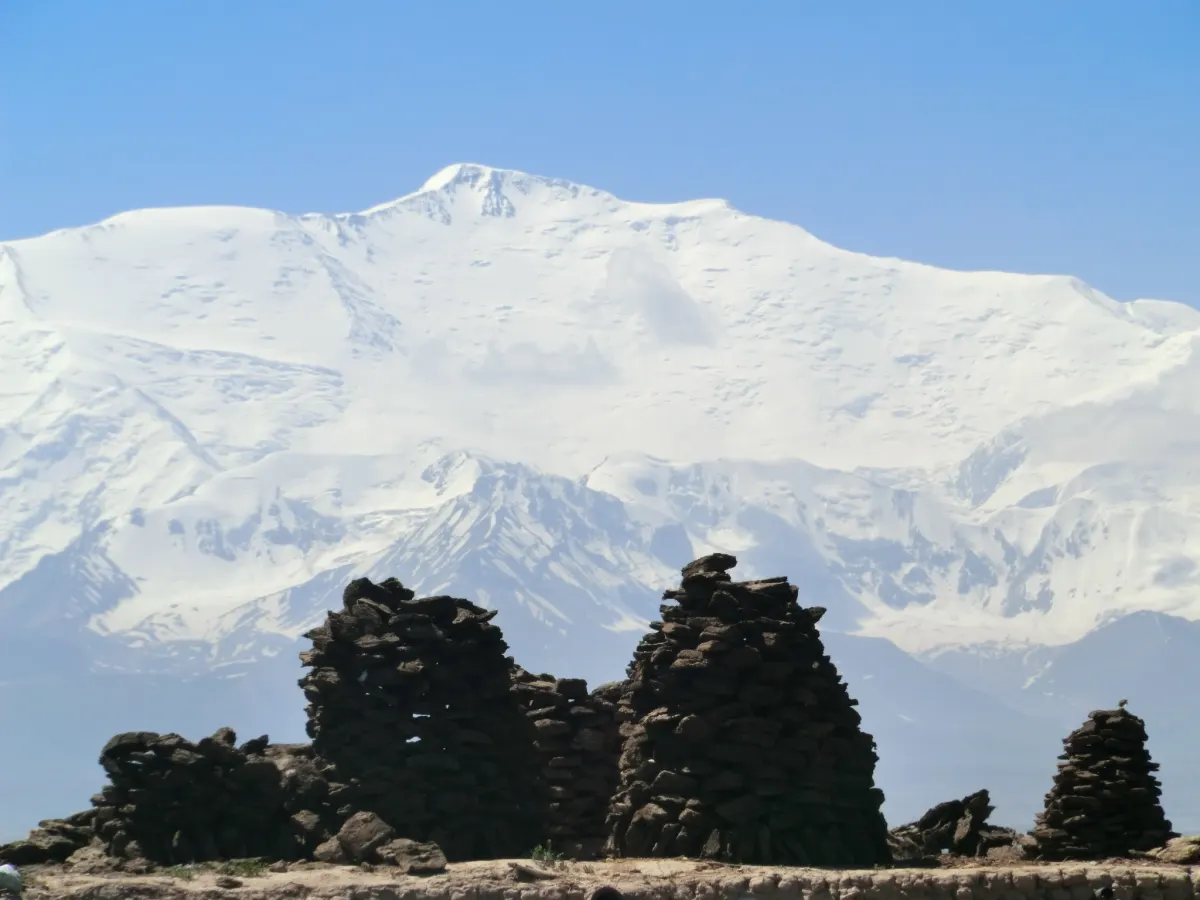 1/3. Lenin Peak from the Alay Valley Photo: Nihongarden, Wikimedia Commons, CC BY-SA 3.0; edited for this site.
 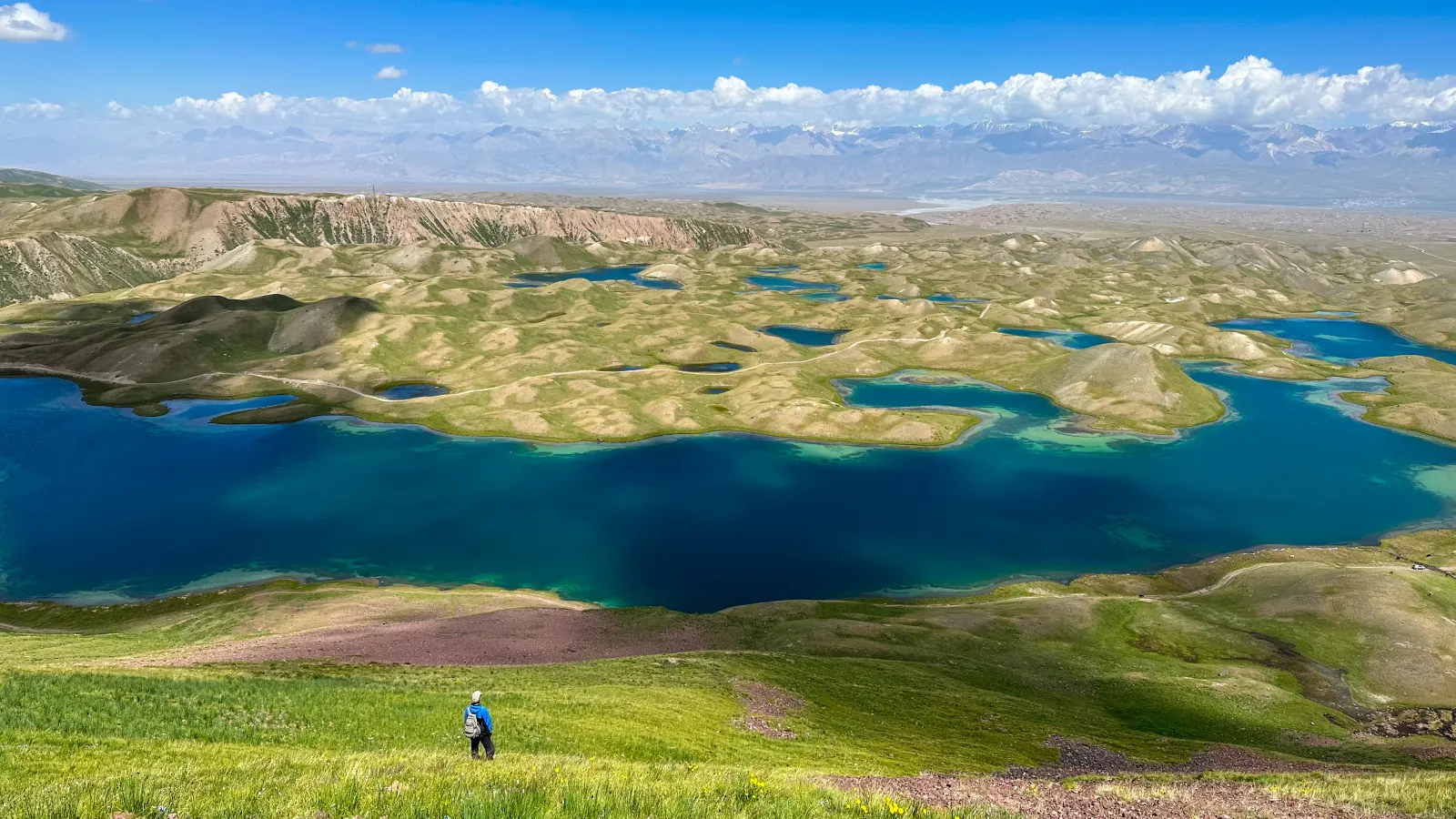 2/3. Tulpar-Kol near Achik-Tash Photo: Atantai Tazhibaev, Wikimedia Commons, CC BY-SA 4.0; edited for this site.
 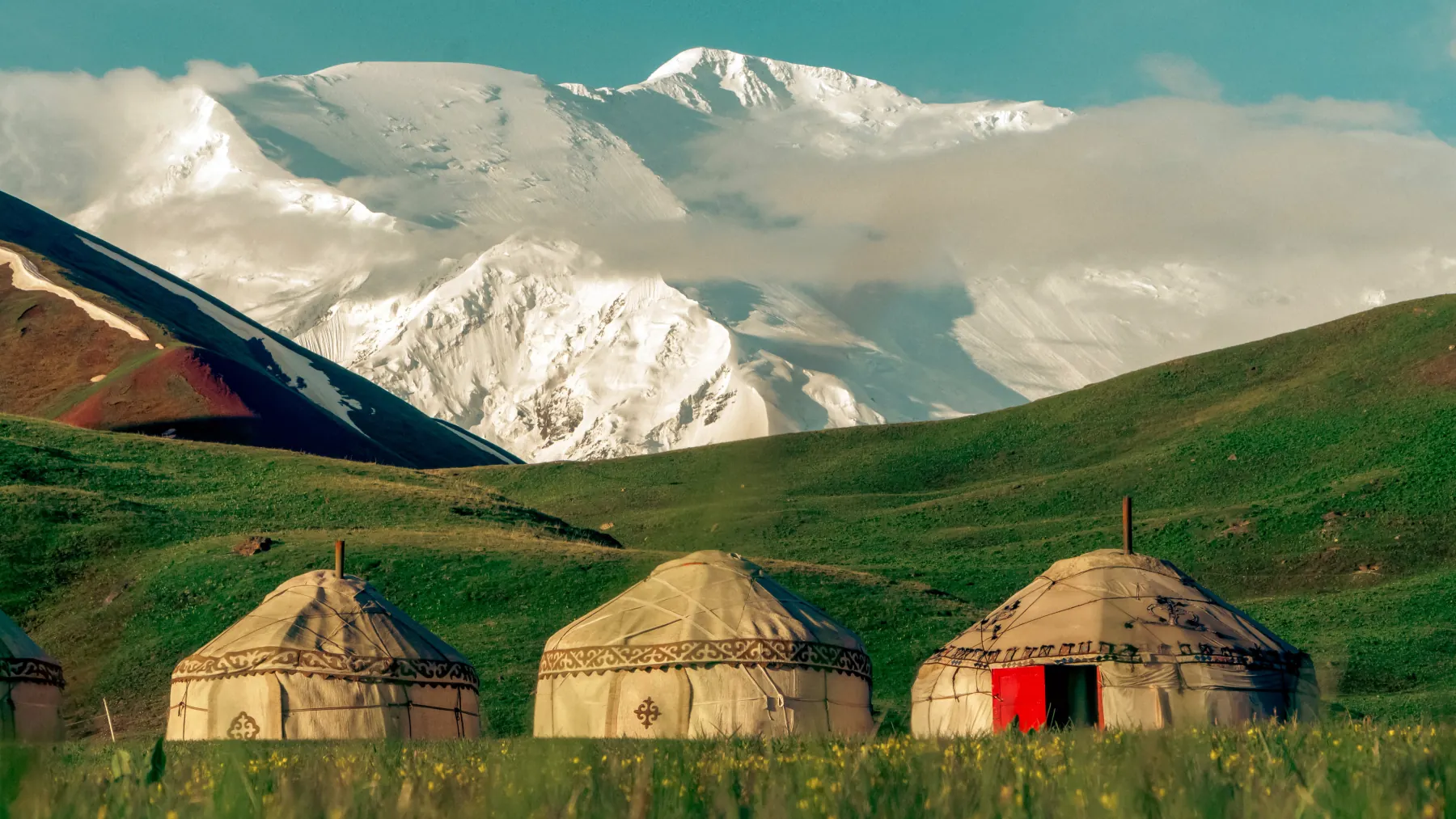 3/3. A summer overnight stop in the Alay Valley Photo: Artur198686, Wikimedia Commons, CC BY-SA 4.0; edited for this site.
 This option still requires acclimatisation. The camp is at roughly 3,600 metres, so walk slowly, drink enough water and avoid a rapid ascent during the first days. Headache, nausea, unusual weakness and impaired coordination mean you must stop gaining height. Deterioration requires descent and medical assistance.
Mountaineering begins where ordinary trekking ends. From advanced base camp, the route crosses a glacier, crevasse zones and avalanche terrain. The logic of a walk around Achik-Tash cannot be extended to this part.
How do you reach Achik-Tash?
Most trips begin in Osh and continue through the Alay Valley to Achik-Tash. The UIAA gives a journey time of about seven hours, though actual timing depends on weather, roadworks and the final dirt section.
The base camp operator usually arranges the transfer. Before payment, confirm the meeting point in Osh, baggage allowance, meals, communication, medical assistance in camp and evacuation procedure. A promise that everything is included is not sufficient.
The summit lies on the state border. Permit requirements and document lists may change, so the expedition operator should confirm in writing which border formalities it will arrange and when passport details are required.
Why is the route not easy?
The classic route via Razdelnaya Peak is considered moderate only in comparison with more technical high-altitude mountains. The UIAA describes steep snow and ice sections of up to 50 degrees, hidden crevasses, avalanche slopes, strong winds and difficult navigation in fog.
Above advanced base camp, climbers need crampons, an ice axe, helmet, harness and rope. Participants must know how to travel roped together, arrest a fall and rescue someone from a crevasse. Physical fitness cannot replace these skills.
Altitude is the principal risk. Evacuation from the upper camps depends on weather and can take time, so the acclimatisation schedule matters more than a fixed summit date. A sound plan includes reserve days and defines the symptoms that require the group to turn around.
The reputation of an “accessible seven-thousander” comes from a relatively clear line and staffed summer camps. It does not make the peak a suitable first mountain or guarantee success even for an experienced participant.
How to prepare an expedition
Allow enough time. The UIAA gives a guideline of 14 to 21 days from arrival at base camp to completion. The schedule depends on acclimatisation, snow, wind and individual response to altitude.
Check the team's experience. Before the trip, each participant should be confident with crampons and an ice axe, roped glacier travel and basic crevasse rescue. Anyone without these skills first needs a training route with an instructor. The active mountain travel guide covers the wider preparation principles.
Confirm the camp season. Base camps mainly operate in July and August. Do not buy flights until the operator confirms accommodation, transfer dates and equipment transport.
Agree communication and rescue arrangements. Confirm the radio channel, daily check-in time, satellite device availability, insurance cover for high-altitude mountaineering and the person responsible for contacting rescuers.
A German-Soviet expedition made the first ascent from the south in 1928. The northern approach was completed in 1934, and after a 1954 ascent the line via Razdelnaya became the basis of today's classic route. The way is now better known, but its objective hazards remain.
Share on social media
If you found this guide useful, share it on social media. It takes a moment and helps more travellers discover the project. Thank you!
Anything to add?
Share your experience, leave a comment or suggest an improvement.