Contents:
What does a trip to the peak involve?
Victory Peak rises in the Kakshaal-Too above the Inylchek glacier system. There is no ordinary viewpoint beside the mountain. Travellers choose between a multi-day trek into the glacier area, a stay at the seasonal base camp and a separate summit expedition.
A trek to South Inylchek shows you the Central Tian Shan without attempting the ascent. It remains a remote high-altitude route with nights in tents, moraine crossings, cold nights and no permanent mobile coverage.
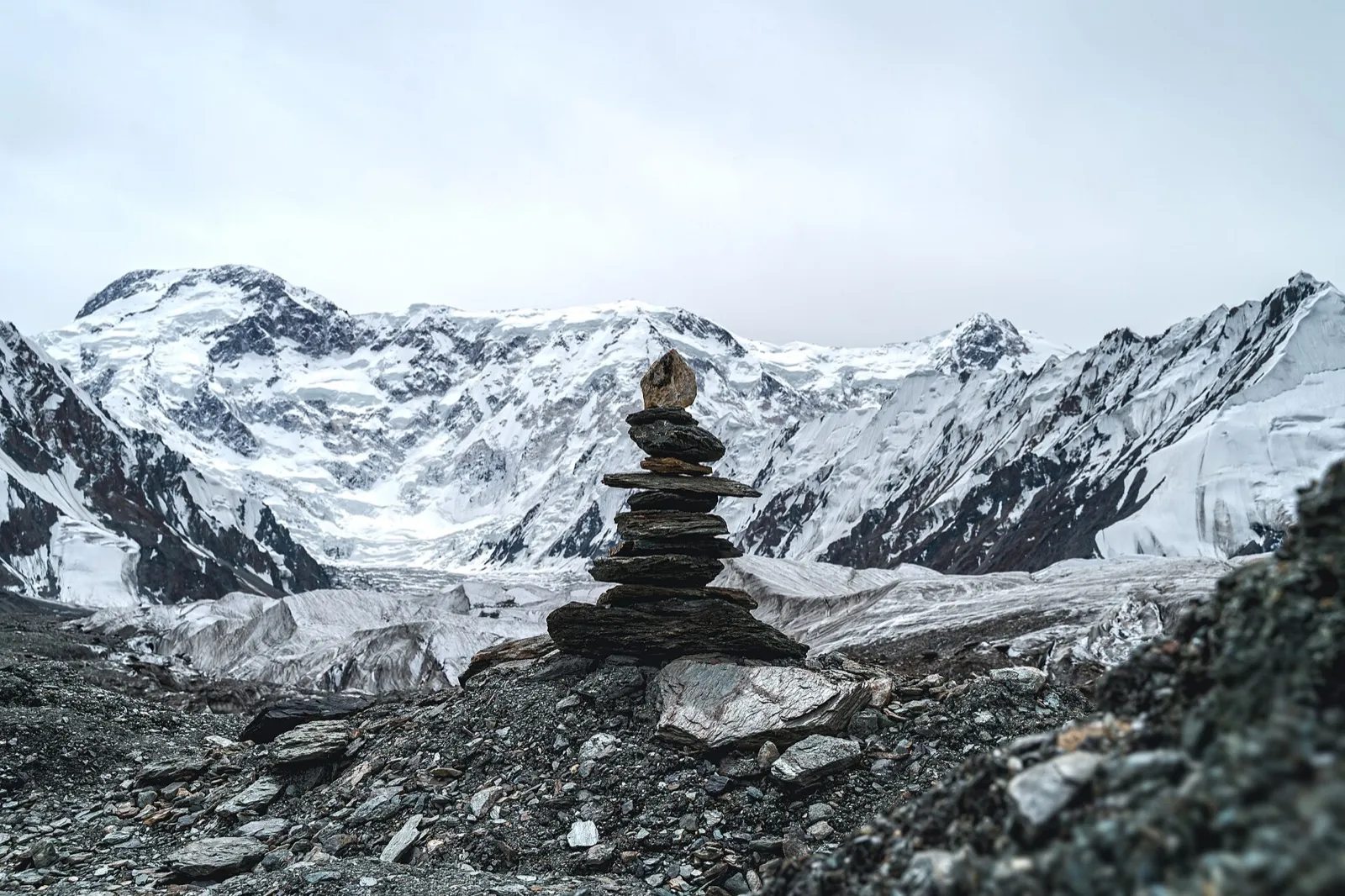 1/3. Victory Peak beyond South Inylchek Glacier Photo: Maryliflower, Wikimedia Commons, CC BY-SA 4.0; edited for this site.
 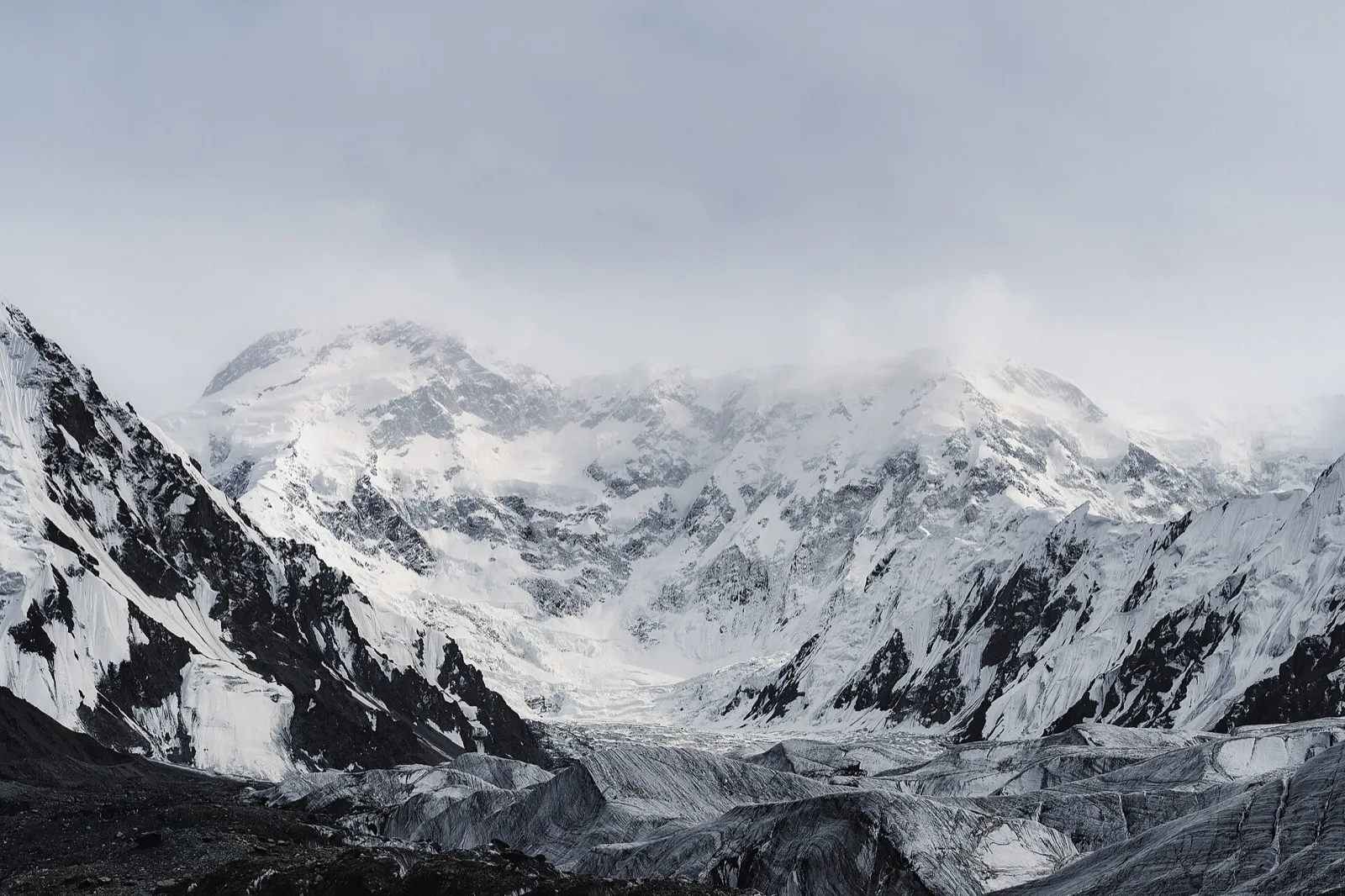 2/3. Cloudy conditions over the massif from base camp Photo: Maryliflower, Wikimedia Commons, CC BY-SA 4.0; edited for this site.
 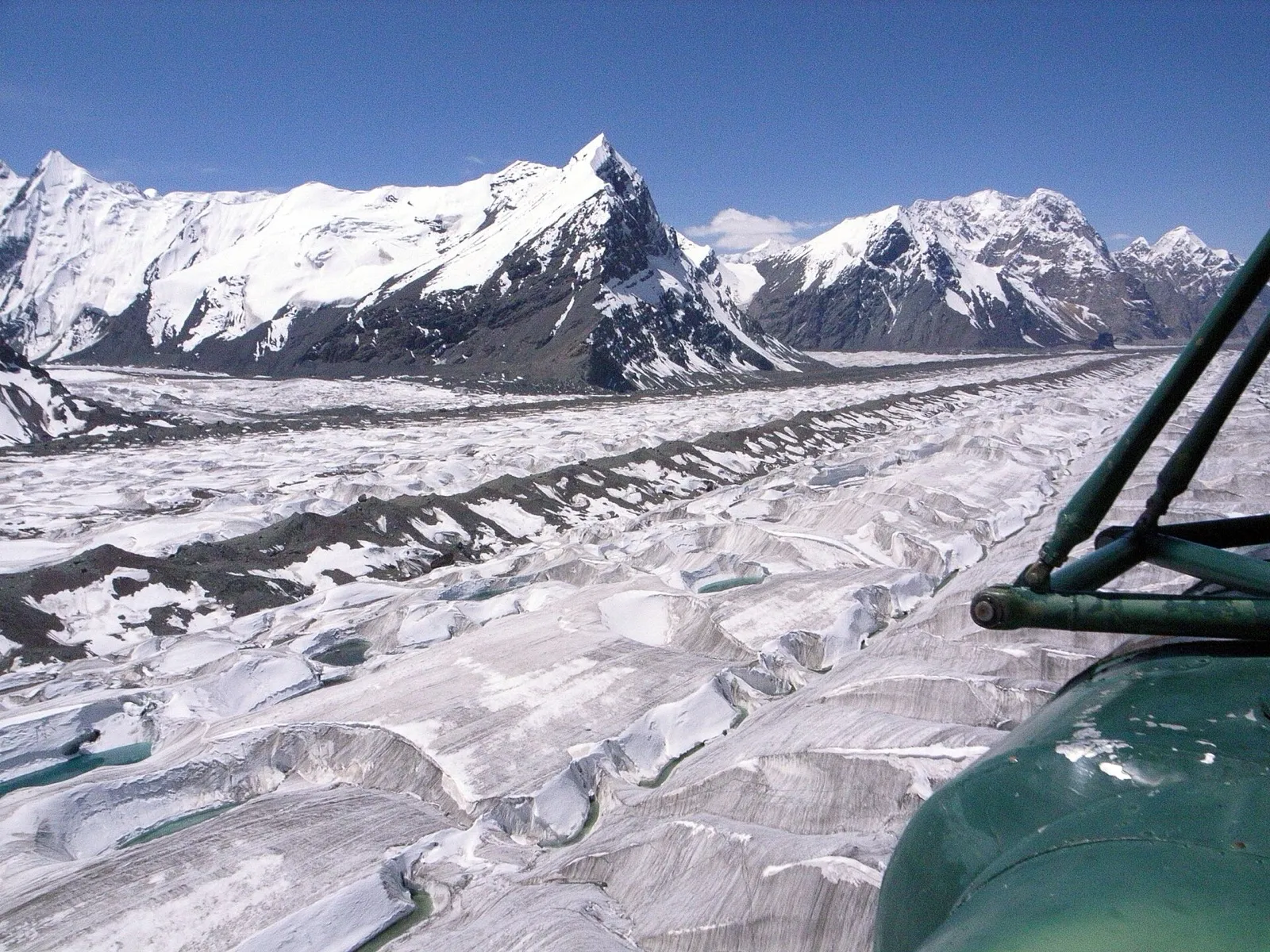 3/3. The glacier scale from the helicopter transfer route Photo: Chen Zhao, Wikimedia Commons, CC BY 2.0; edited for this site.
 The summit presents a different level of risk. The classic line crosses the Zvezdochka Glacier, Dikiy Pass and the western summit before continuing along a long high-altitude ridge. Turning back here can require no less time and energy than continuing.
How do you reach South Inylchek?
Logistics usually begin in Karakol. The group then travels towards the Sary-Jaz Valley and the seasonal Maida-Adyr camp before walking to the glacier or using an air transfer arranged by the operator. No road reaches the mountain itself.
The whole area lies within a border zone. Foreign visitors need a permit arranged in advance; the current procedure is published on Kyrgyzstan's state permits portal. Passport information is often sent to the operator beforehand, but responsibilities and deadlines should be written into the contract.
Do not book an international flight for the day after you expect to leave the glacier. Weather delays both walking groups and helicopters, while an extra day in Karakol costs less than a missed flight.
Why is the ascent dangerous?
Victory Peak combines extreme altitude, cold, avalanche terrain and a long summit ridge. Weather can close the route even after a clear start, while unconsolidated snow slows progress dramatically. High camps stand where full evacuation is difficult.
The classic route is a serious technical climb. American Alpine Club publications give the normal route as grade 5B on the regional scale. This is no place to learn to use crampons or spend a first night above 5,000 metres.
The idea of reaching the summit at any cost is particularly dangerous. Once on the extended ridge, the return takes many hours. The team therefore sets turnaround times in advance and turns back before them even when the summit appears close.
Vitaly Abalakov's team made the first reliably documented ascent in 1956. The American Alpine Journal recorded it shortly after the expedition. Modern communication and forecasts have improved planning, but not made the mountain easier.
What to check before travelling
The leader's experience. Ask about completed expeditions on Victory Peak, decisions to turn around and evacuation arrangements, not merely total years in the mountains. Confirm the maximum number of participants per guide.
Acclimatisation plan. The route requires proven high-altitude experience and gradual ascent. A popular acclimatisation climb on another mountain also carries risk and does not replace rest.
Communication and insurance. The contract should cover satellite communication, regular contact with base camp, the rescue call procedure and insurance that explicitly includes mountaineering at the stated elevation.
Time and fuel reserve. Weather can hold a group in camp for several days. Equipment, gas and food must include a margin rather than assuming a perfect schedule.
If your goal is to see the glacier rather than achieve a sporting result, consider the route to Lake Merzbacher. It also needs organised logistics but avoids the technical summit ridge.
Share on social media
If you found this guide useful, share it on social media. It takes a moment and helps more travellers discover the project. Thank you!
Anything to add?
Share your experience, leave a comment or suggest an improvement.