Contents:
What makes the Abshyr-Ata waterfall unusual?
Water appears directly from a dark opening in the limestone wall. Osh's tourism development strategy describes an opening about 1.5 metres high and two cascades of roughly 15 and 12 metres. The main view is from the platform opposite, where you can see both the outlet and the confined scale of the gorge.
The water level changes with the season. The Abshyr-Sai river is fed by snow and rain, so the flow is usually stronger in spring. After a downpour, the water becomes muddy and the road may be damaged. A photograph of the waterfall at full flow does not guarantee the same view in a dry period.
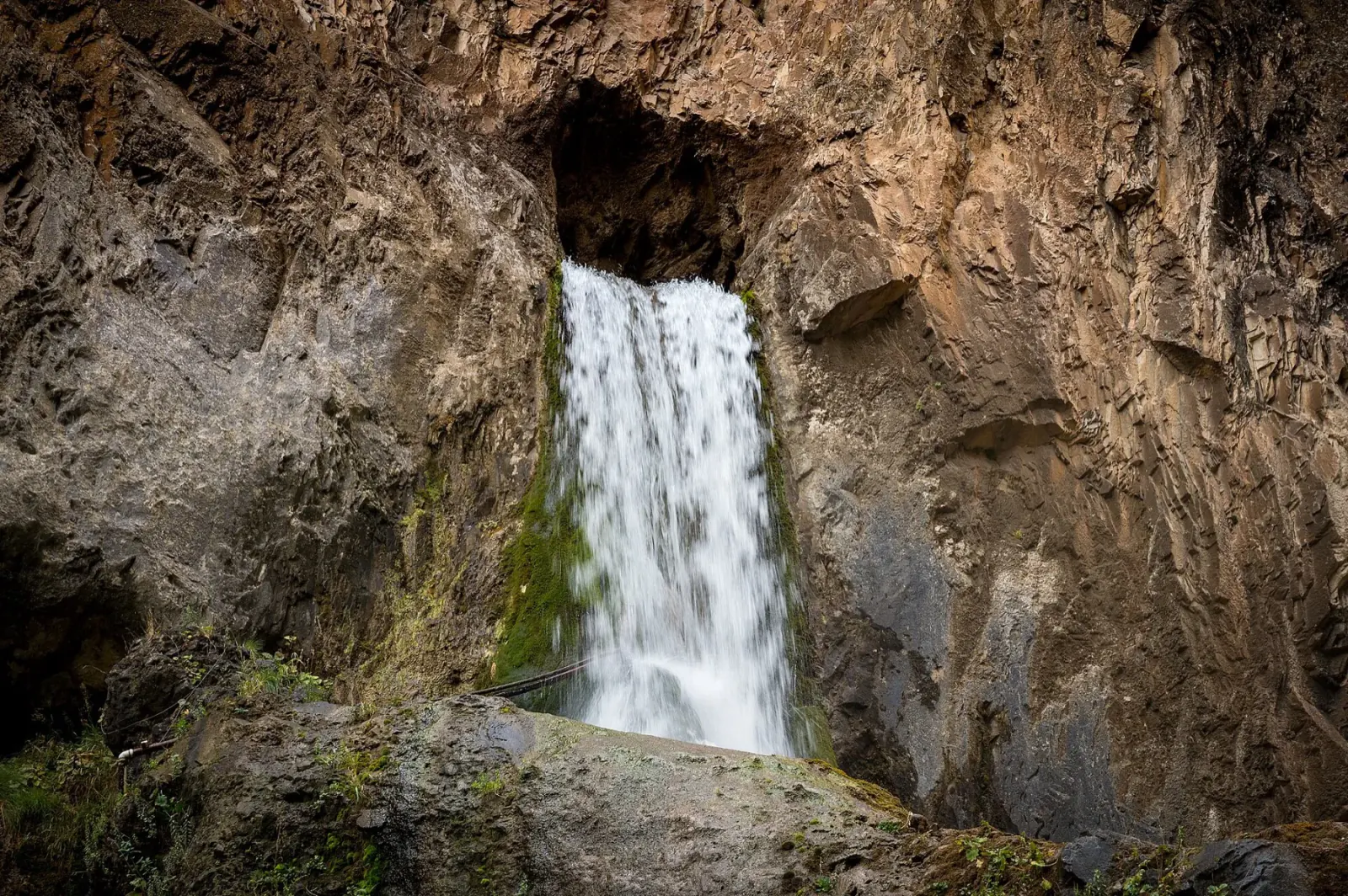 1/2. Water emerging from the rock Photo: Arina Pan, Wikimedia Commons, CC BY-SA 4.0; edited for this site.
 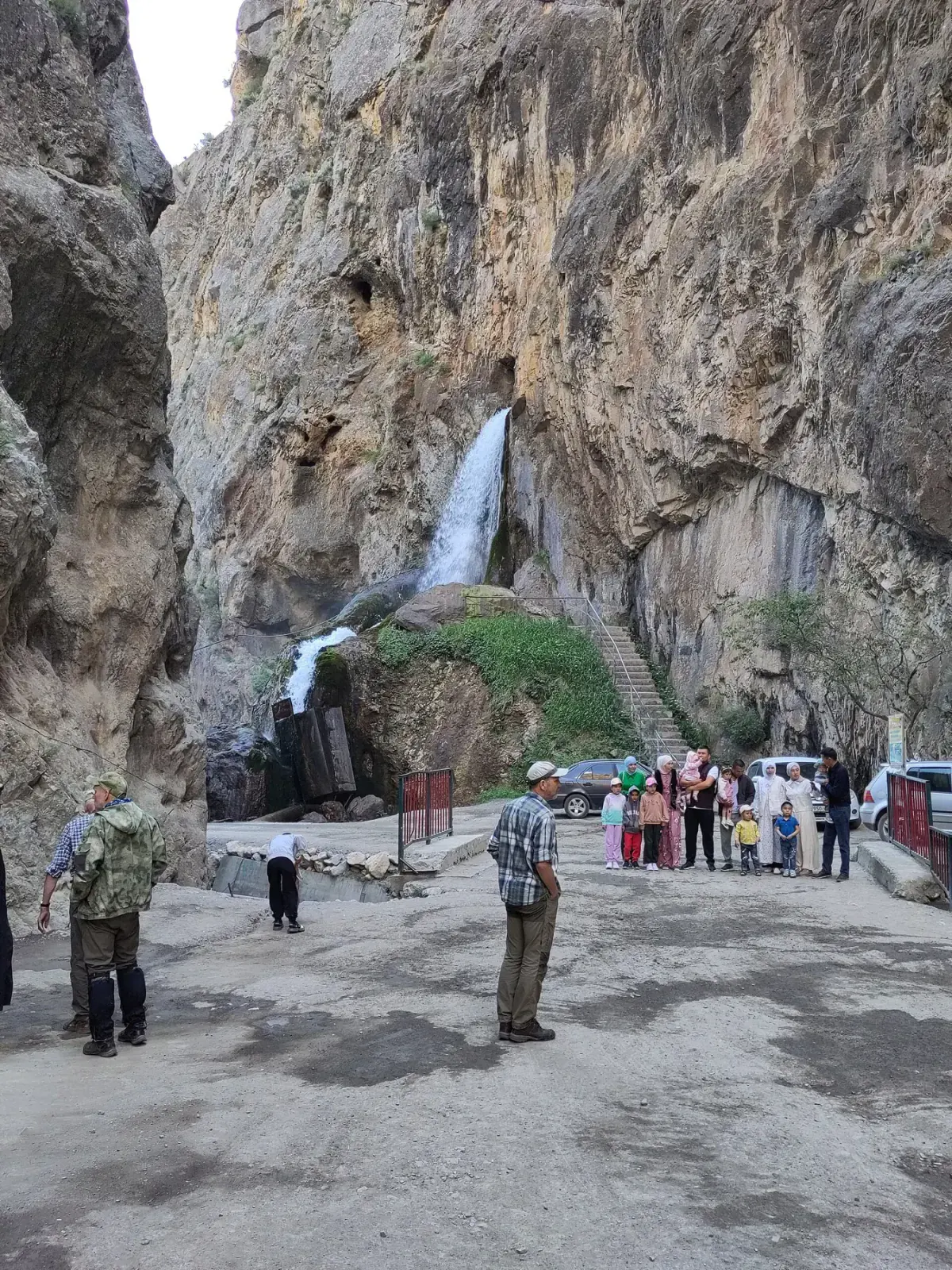 2/2. The narrow walls of Abshyr-Ata Photo: Gkasperek, Wikimedia Commons, CC BY-SA 4.0; edited for this site.
 How to get to Abshyr-Ata from Osh
The gorge is about 70 km from Osh. The route heads west towards Nookat, then follows local roads to Abshyr-Sai. Allow at least two hours of driving each way without stops, and leave a larger margin after rain.
There is no convenient direct tourist service to the waterfall. Arrange a car that will wait, agree on the final accessible point in advance and do not let the driver leave without a reliable return arrangement. Download an offline map and carry cash.
The walk from the parking area
A normal visit does not require technical trekking, but the final paths can be wet, narrow and crowded. Wear shoes with grippy soles, hold children's hands near the edge and let oncoming visitors pass where the platform is wider.
Do not move beneath the falling water, climb onto wet ledges or approach the opening itself. The rocks become slippery, and natural rockfall is possible from above. After heavy rain, do not enter the confined section of the gorge until local services have confirmed that it is safe.
The spring and local tradition
Abshyr-Ata is revered as a sacred spring, and many visitors come for more than the scenery. Behave quietly, do not block access with a long photo session and ask permission before photographing people.
Revered status does not prove that the water is microbiologically safe. If you want to collect it, use a clean container, then filter or boil it before drinking. Do not present local accounts of healing properties as medical advice.
When to go and what to watch for
The flow is usually stronger in spring and early summer, but the risk of high water and erosion is also greater. The road is easier in the dry summer, although the platform can be hot and busier. Days are shorter in autumn; winter can bring ice and a closed approach road.
- check precipitation over the previous 24 hours and the condition of the final road section;
- bring water, food, non-slip footwear and a light rain jacket;
- do not stand beneath overhanging wet walls;
- take all rubbish away and do not wash dishes in the spring;
- set a time to return to the car before dark.
A plan for a day trip
Leave Osh in the morning, make a short stop in Nookat, allow two or three hours for the gorge and return in daylight. Do not add a long mountain route after the waterfall because the drive already takes a substantial part of the day.
For another relaxed trip from Osh, compare Abshyr-Ata with Papan Reservoir. Our guide to Osh Region covers a wider choice of destinations and the road connections between them.
Share on social media
If you found this guide useful, share it on social media. It takes a moment and helps more travellers discover the project. Thank you!
Anything to add?
Share your experience, leave a comment or suggest an improvement.