A panorama of the Ak-Buura Valley
Papan Reservoir lies roughly 20 kilometres south of central Osh as the crow flies. Water fills the narrow Ak-Buura Valley, while the road runs between dry folded slopes and green areas around villages. The trip clearly shows where Osh's water comes from and how quickly the urban landscape gives way to mountains.
The best views open from elevated sections of public road. There is no need to descend to the water or approach the dam for a stop. The shores are steep and sometimes covered in scree, with few safe, fenced viewpoints.
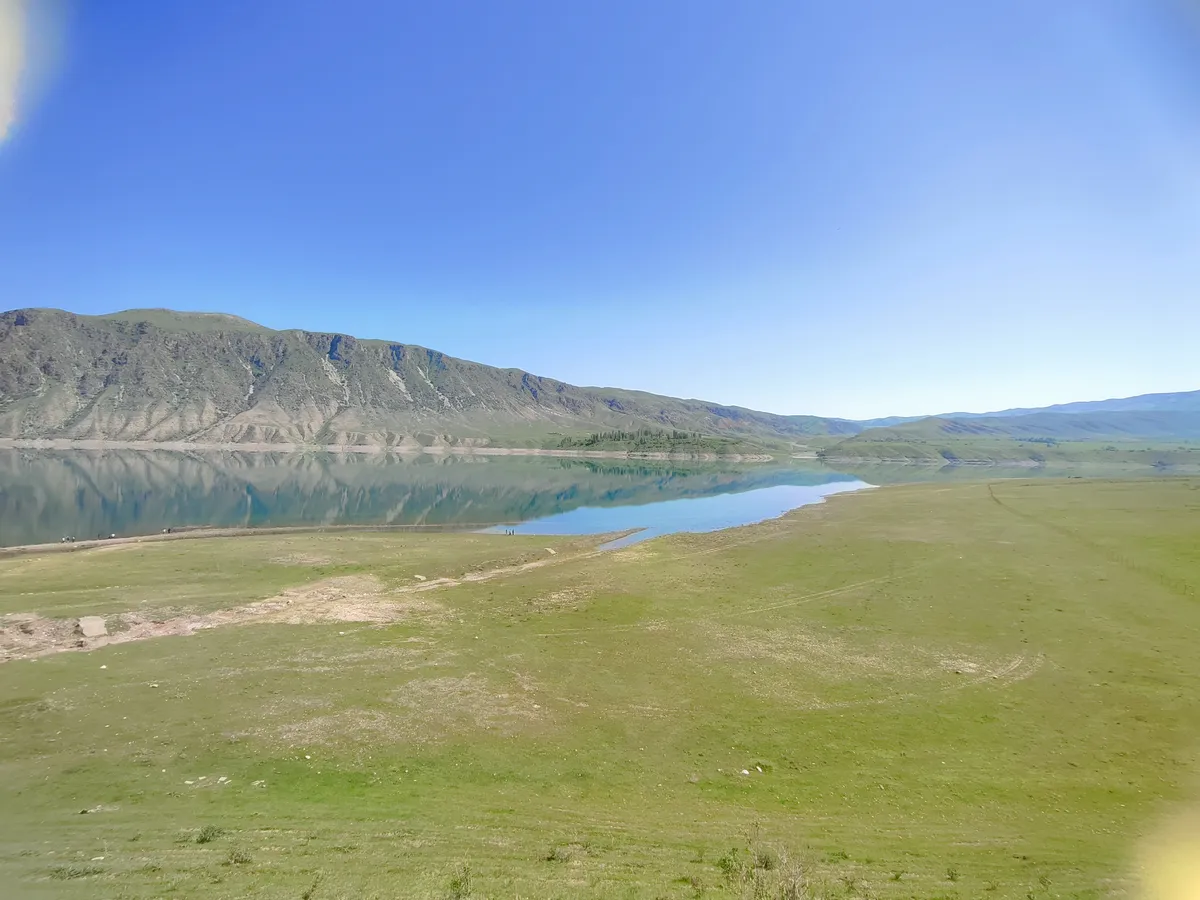 1/2. The reservoir shore in spring Photo: Muzaffar Murodovich, Wikimedia Commons, CC BY-SA 4.0; edited for this site.
 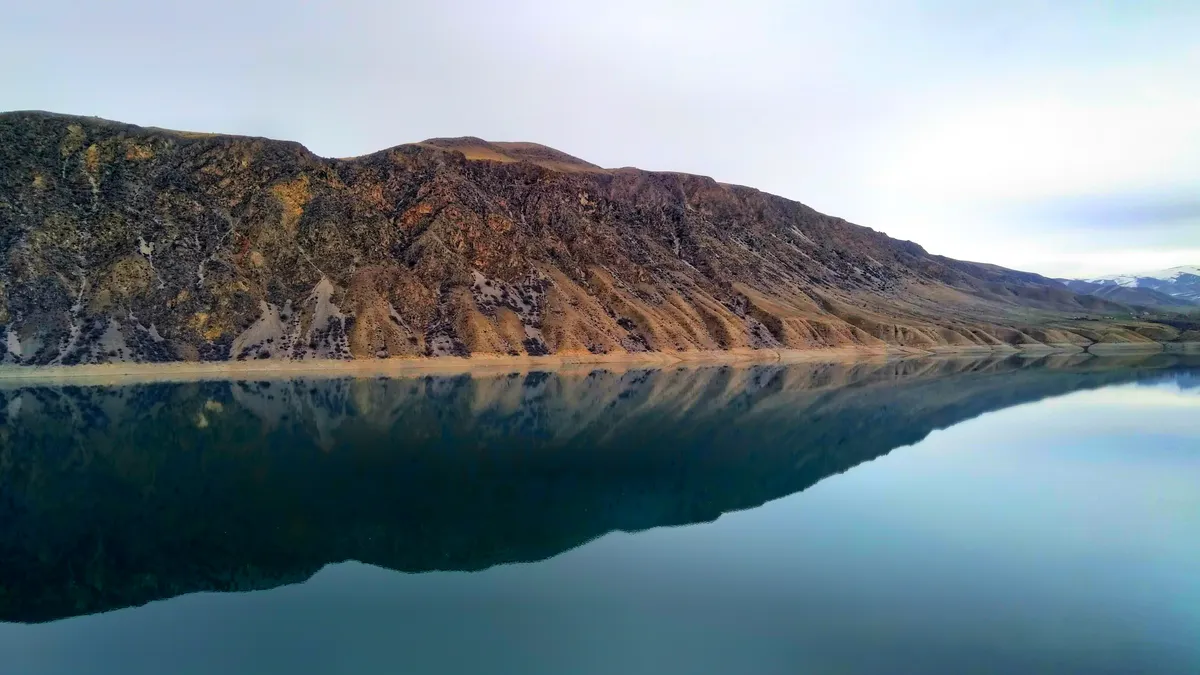 2/2. Slopes above Papan Reservoir Photo: Devesh Pandey, Wikimedia Commons, CC BY-SA 4.0; edited for this site.
 Older tourist descriptions promise a beach, windsurfing, boat hire and equipped picnic areas here. There is no confirmation of this infrastructure. Treat Papan as a working reservoir and a scenic stop on the way towards the upper Ak-Buura Valley.
How to drive from Osh
From Osh, drive south along the Ak-Buura through Ozgur towards Papan. The road distance to the northern part of the reservoir is normally about 25-30 kilometres. The main road is suitable for an ordinary car in dry weather, although journey time depends on city traffic, roadworks and your chosen viewpoint.
The road continues farther into the mountains, so local vehicles pass the reservoir. Do not leave your car on a narrow bend or obstruct access to service roads. Heavy rain can trigger rockfalls and debris flows on the slopes.
Half a day from Osh is enough for a short trip. Bring water, closed footwear and sun protection even without a hike: there is little shade, and a descent over loose ground quickly becomes dangerous in ordinary trainers.
Water for Osh and the fields of the Fergana Valley
Papan Reservoir regulates the flow of the Ak-Buura. Construction was completed in 1985. The hydraulic complex supplies water to Osh, Aravan and Kara-Suu districts and agricultural areas downstream, including land in Uzbekistan.
The original design specified a capacity of 260 million cubic metres. Following additional calculations, the safe operating limit was set at about 215 million cubic metres. Both figures therefore appear in references: the first describes the design, while the second is the actual storage regime reported by the Water Resources Service.
The level changes during the year with inflow and water supply. The phrase “the reservoir has become shallow” explains little without a date: the season, reserves at the start of the irrigation period and current inflow all matter.
What you can do and what to avoid
Look from the road. Choose a broad, stable stopping place and remain behind barriers. Do not climb fences or enter the dam, spillway or service area without permission.
Do not descend directly. Slopes above the water may look gentle in photographs but consist of loose soil and rock. Emergency services have previously had to rescue a person who fell from a cliff in the upper reservoir. No photograph is worth that descent.
Do not treat the shore as a beach. Follow signs and instructions from local authorities. Do not swim or launch a boat anywhere without an officially permitted zone, lifeguards and a clear exit from the water.
Do not fish without checking. Fishing rules, closed periods and permitted tackle change. Ask the territorial environmental authority first rather than a random person on the shore.
Protect the water source. Do not wash vehicles or dishes at the water's edge, leave food waste or light a fire in dry grass. This water has practical importance to Osh residents every day.
Share on social media
If you found this guide useful, share it on social media. It takes a moment and helps more travellers discover the project. Thank you!
Anything to add?
Share your experience, leave a comment or suggest an improvement.